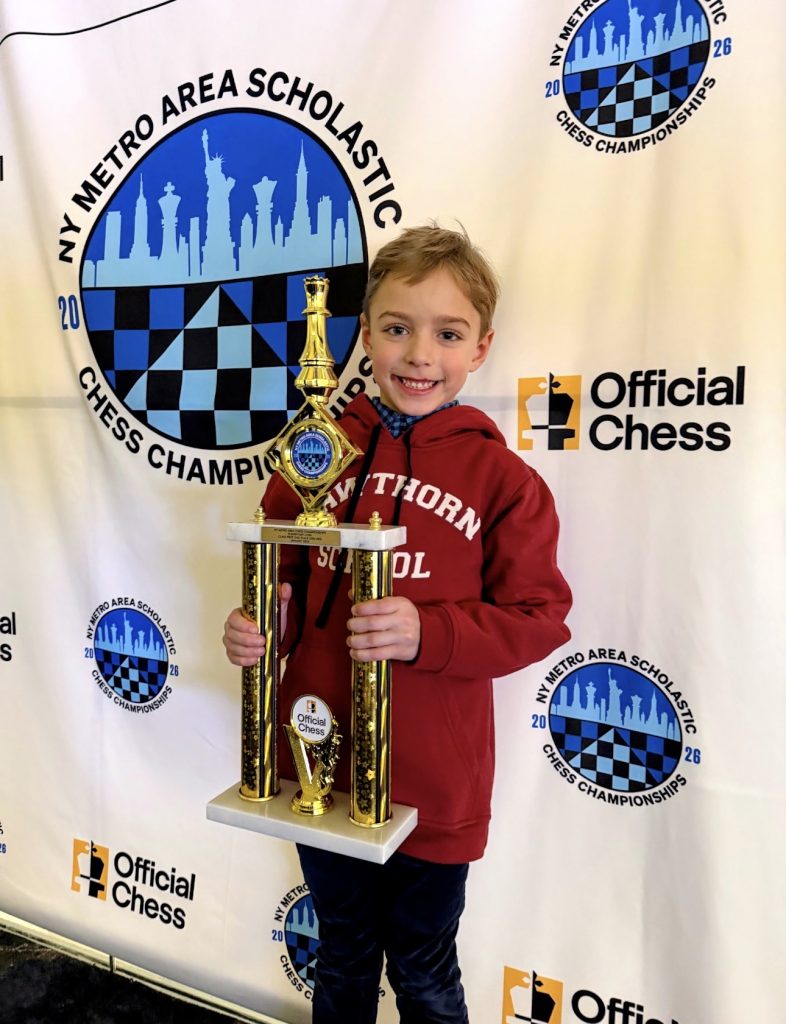

Championship Recap: A Weekend of Chess, Growth, and Community
A Message from Official Chess
Hello!
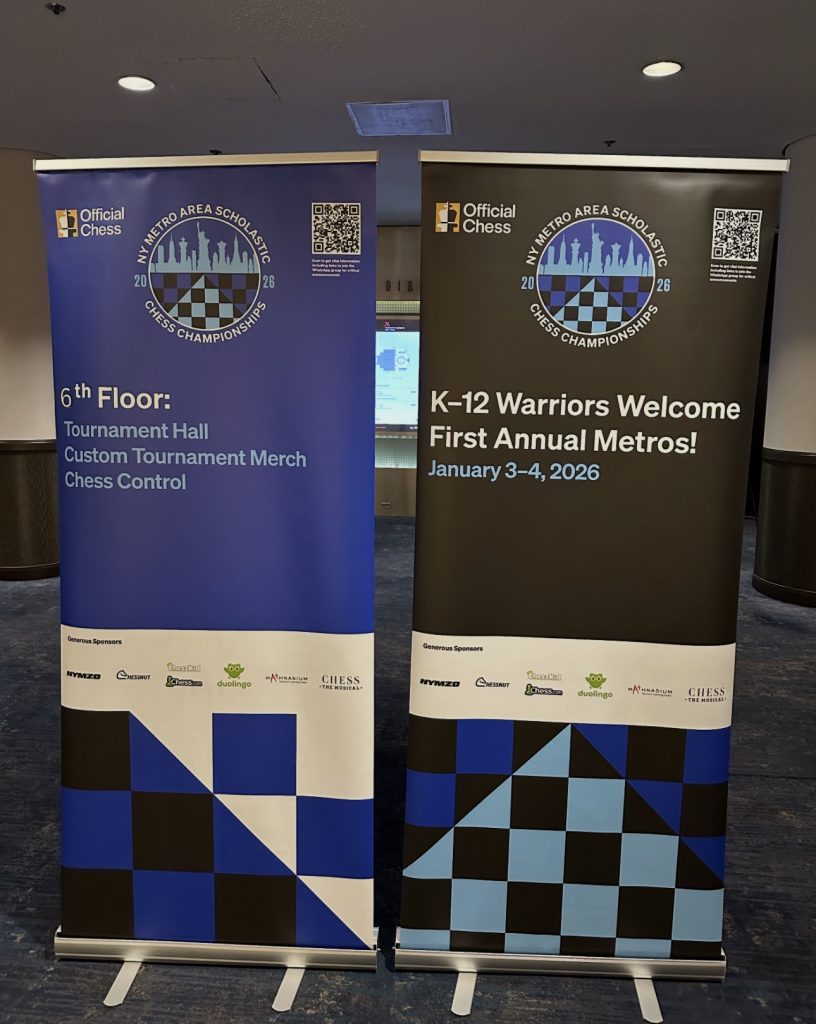
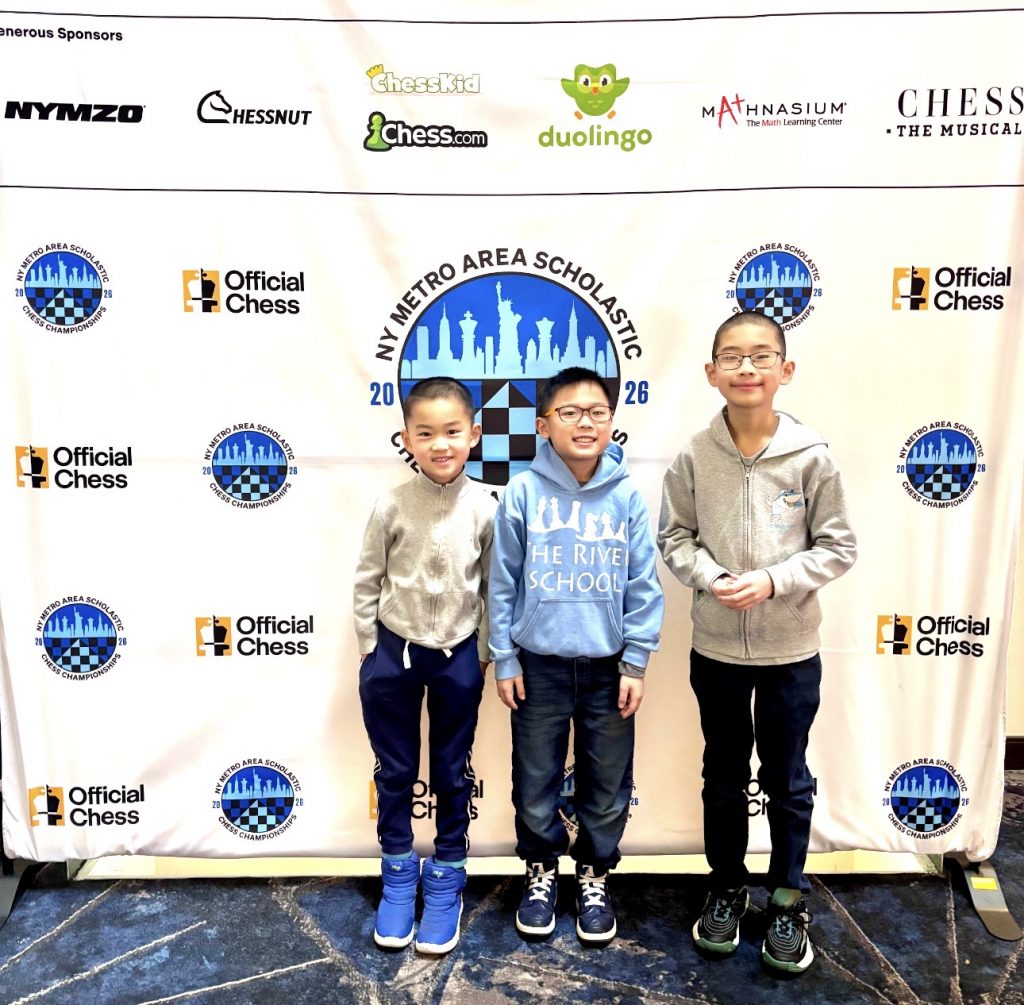
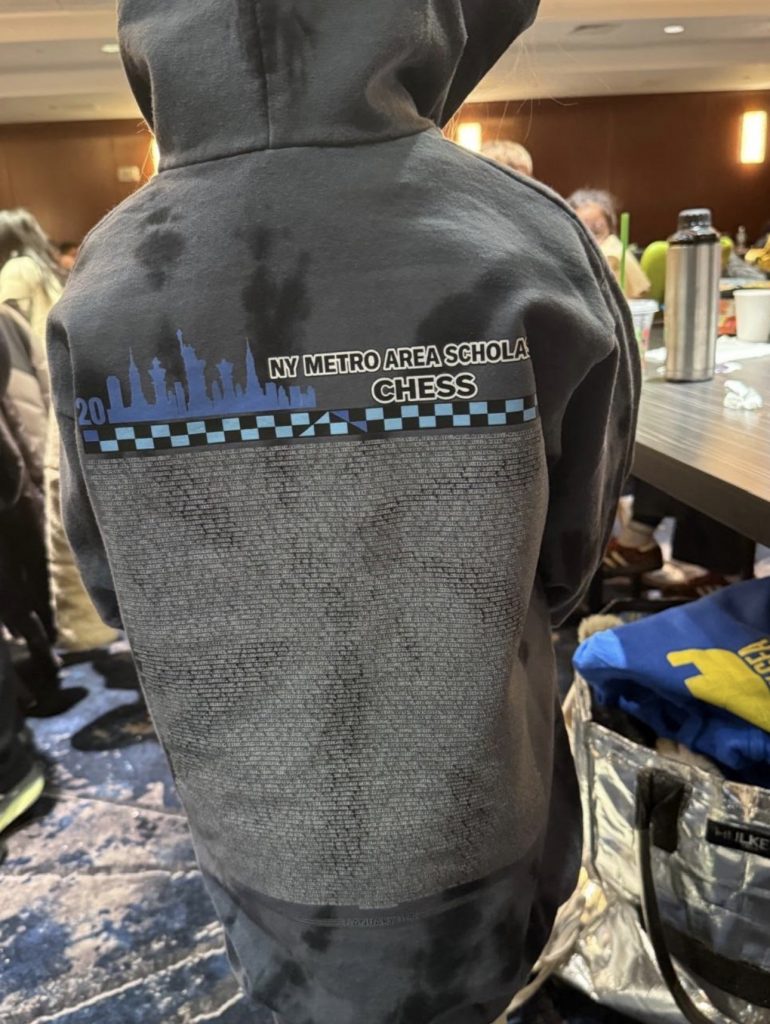
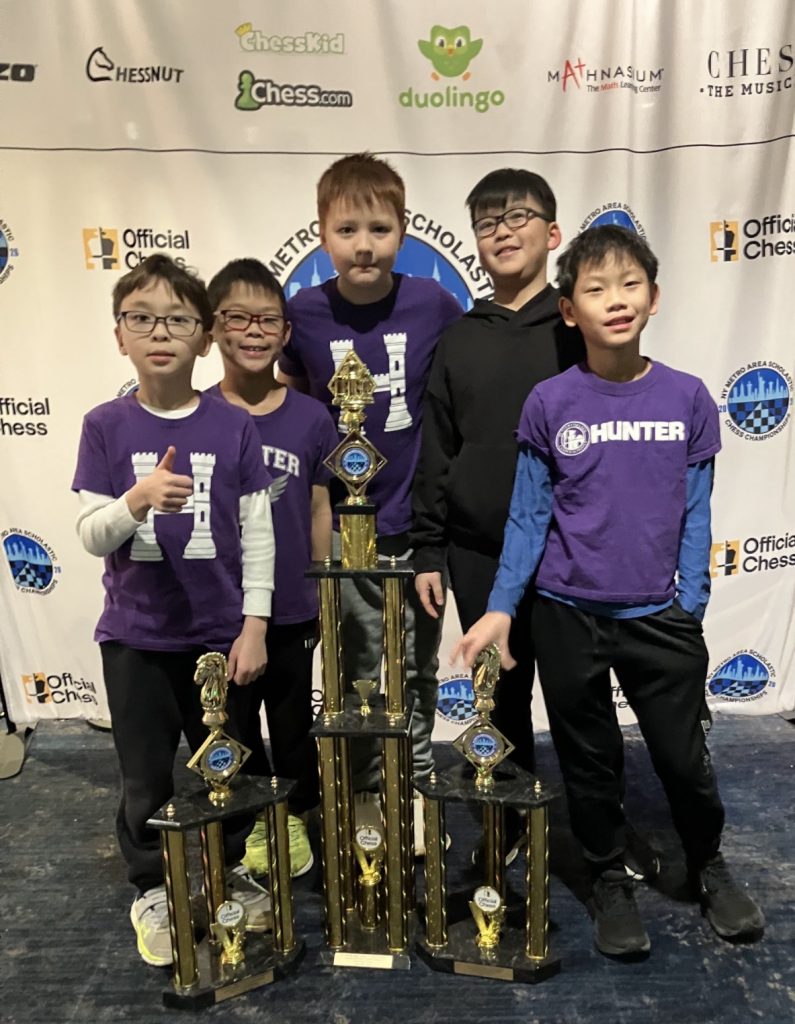
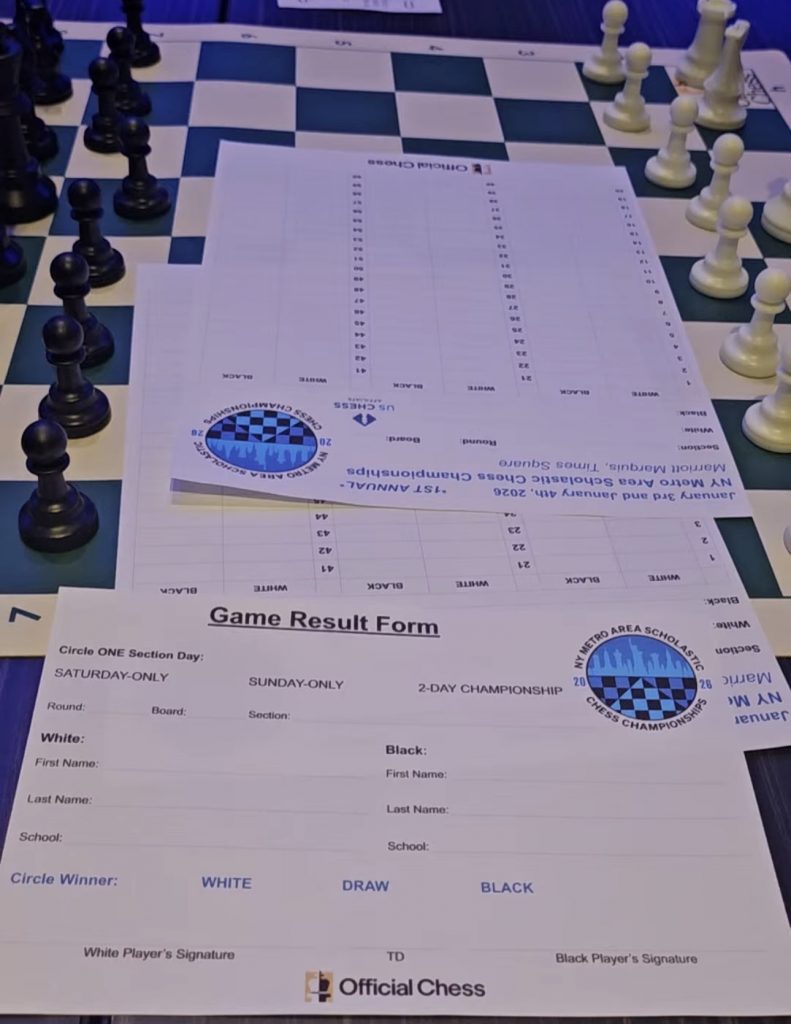
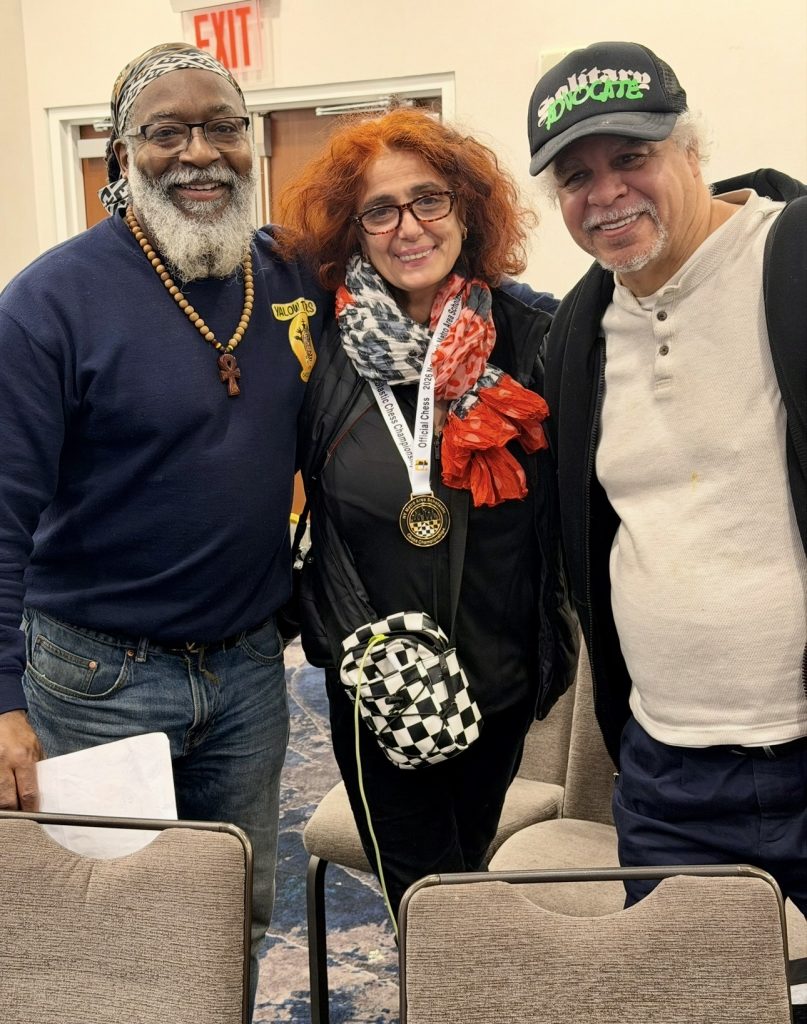
On behalf of the organizing team, thank you to all the families, coaches, and schools who helped make the 1st Annual NY Metro Scholastic Chess Championships such a positive experience on Jan 3, 4, 2026. Our goal is always to create an event where students feel welcomed, challenged at the right level, and proud of their effort – whether it’s their very first tournament or one hundredth.
Seeing so many students excited to compete, support one another, and grow through chess is what makes this event special. We are grateful for the trust families placed in us and for the continued support of the scholastic chess community and our sponsors.

Around the Web
US Chess Federation Recap – Don’t just take our word for it. If you missed it, don’t miss next year!
Top Boards – Follow the games of the best players at the Metros.
Ratings Report – Final crosstable results from US Chess Federation. (NB this is NOT going to match the standings from the tournament. And that is normal.)
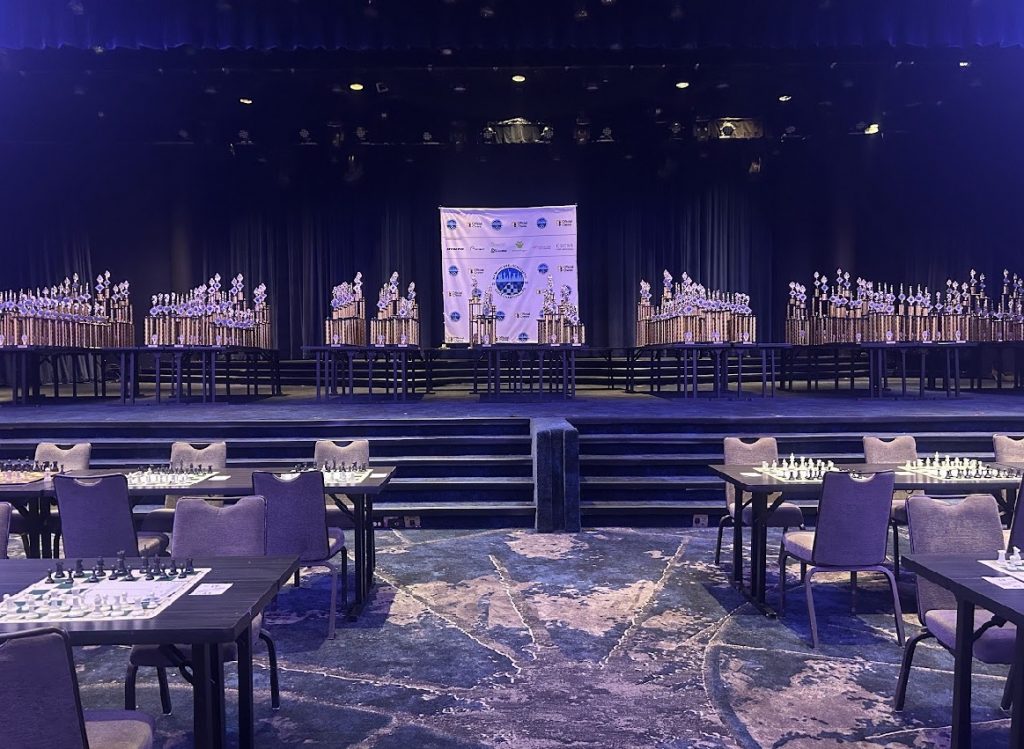
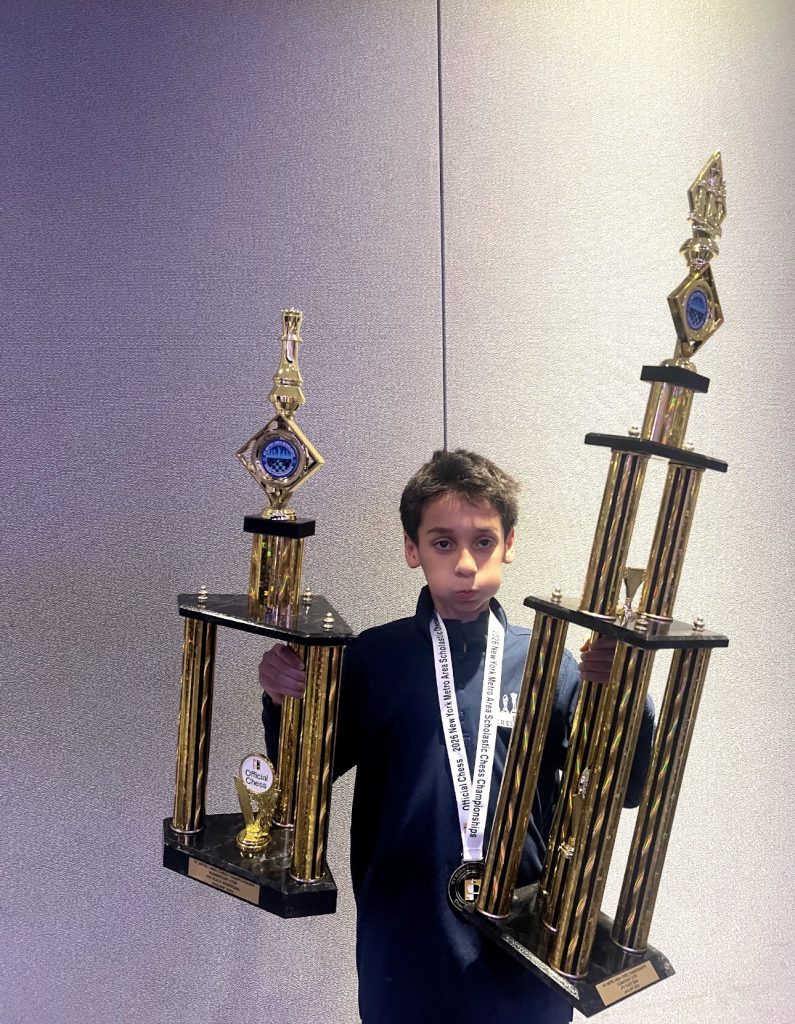
Awards Ceremony Photos AND Videos – ALL the podium winners from the awards ceremonies as captured by our professional photographers, yes both photos and videos!
Parent Photos Collection – Parents take the best photos! See from the eyes of other attendees and parents and upload any good photos you may have taken. Sharing is caring!
Shareable link to video: https://www.youtube.com/watch?v=KaOEdQUIQqw
A Tournament for Every Player
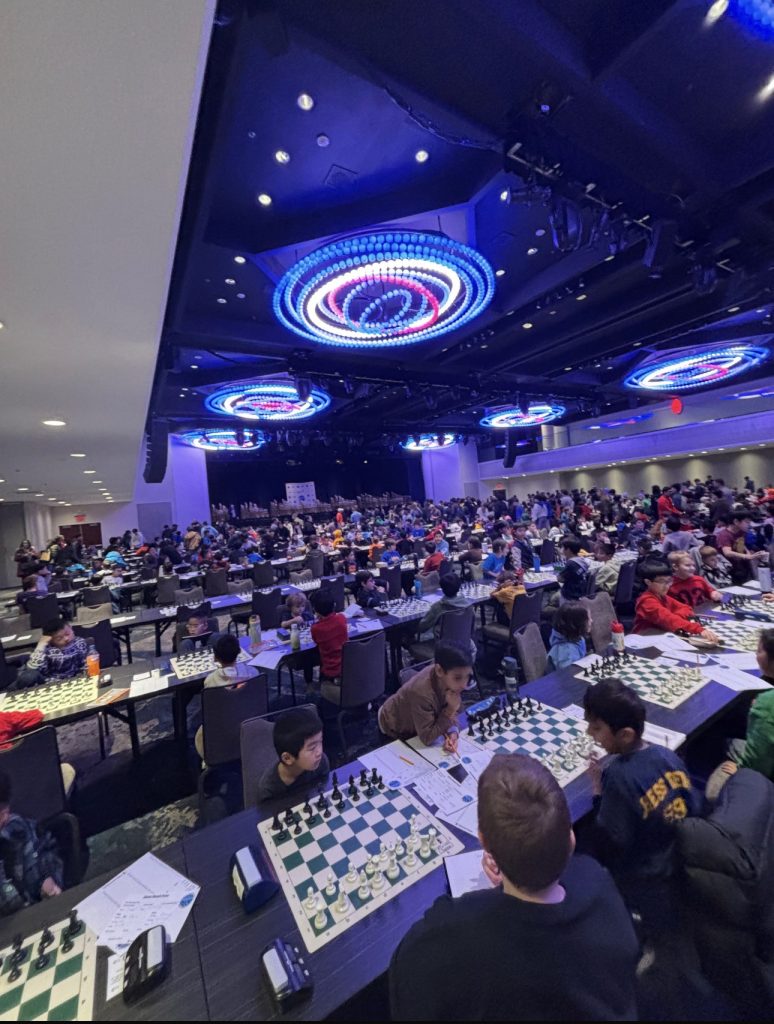
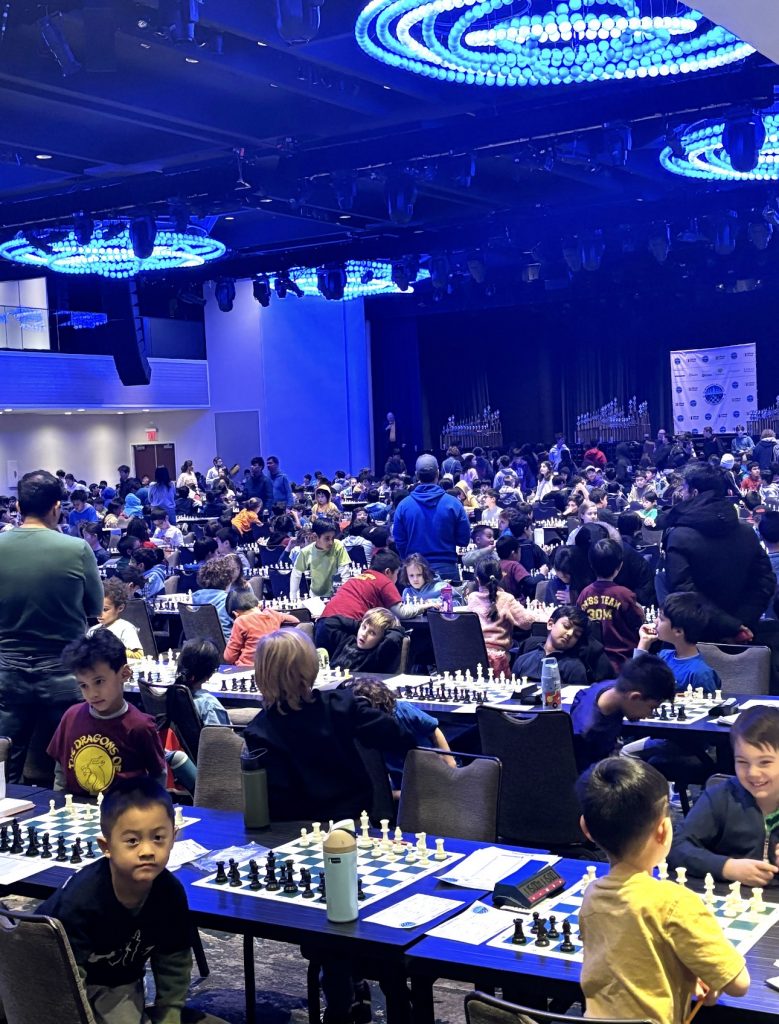
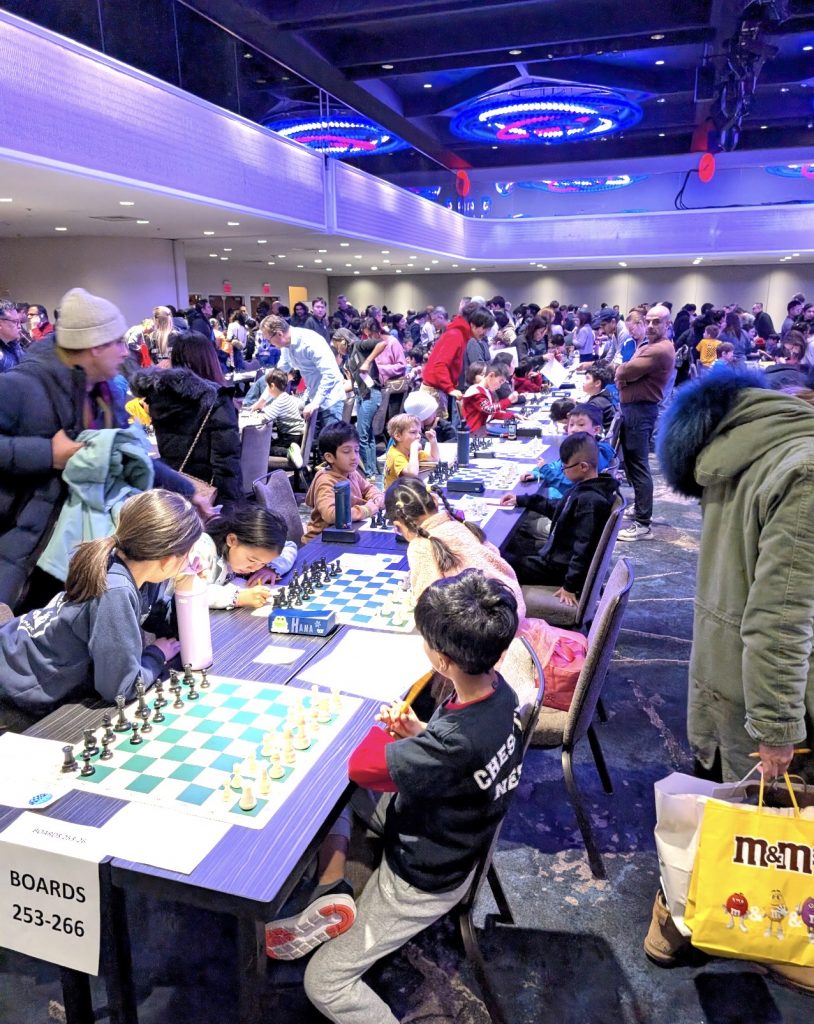
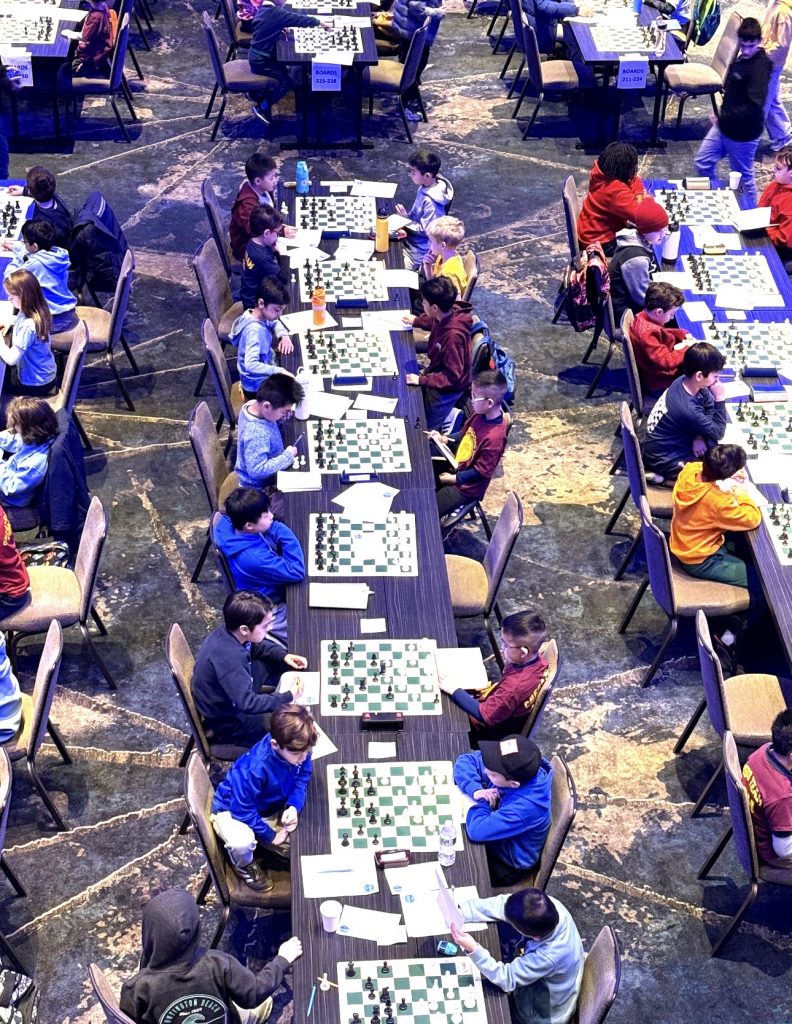
The final entry count totaled 1,438 entries, spanning Kindergarten through 12th grade.
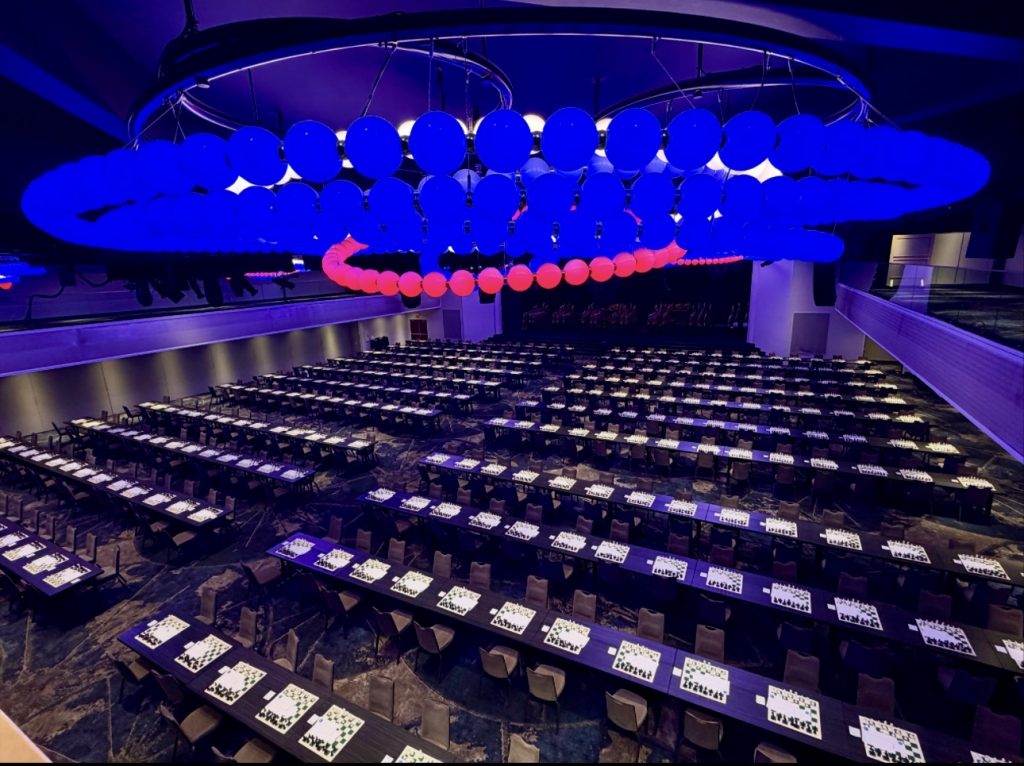
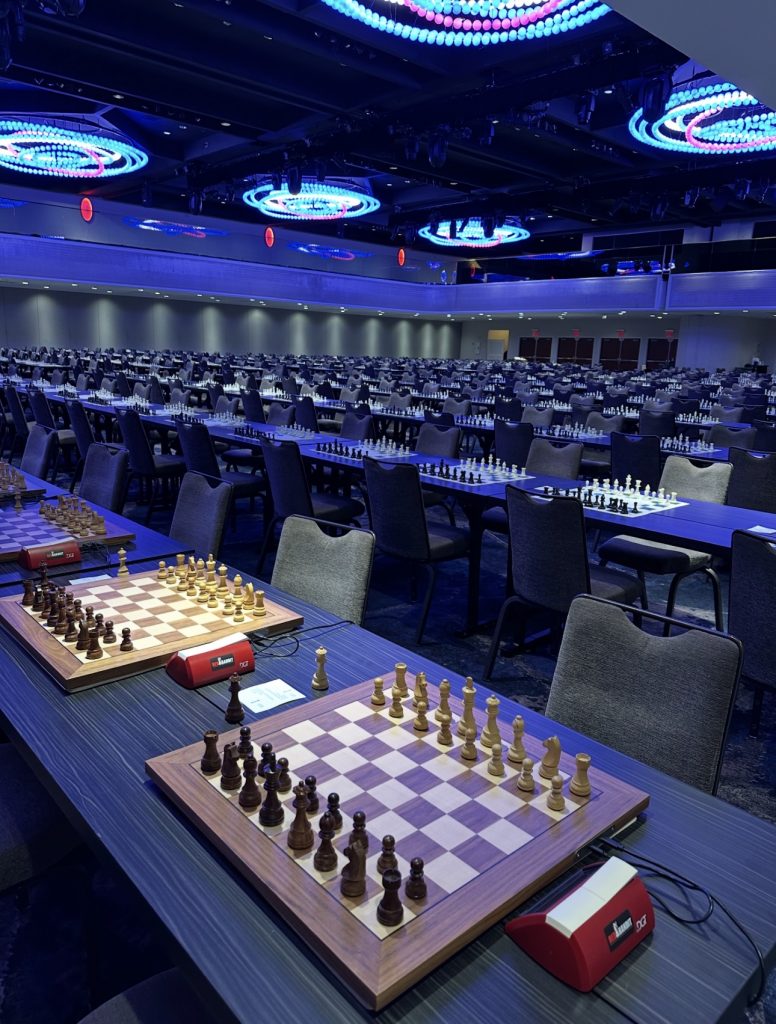
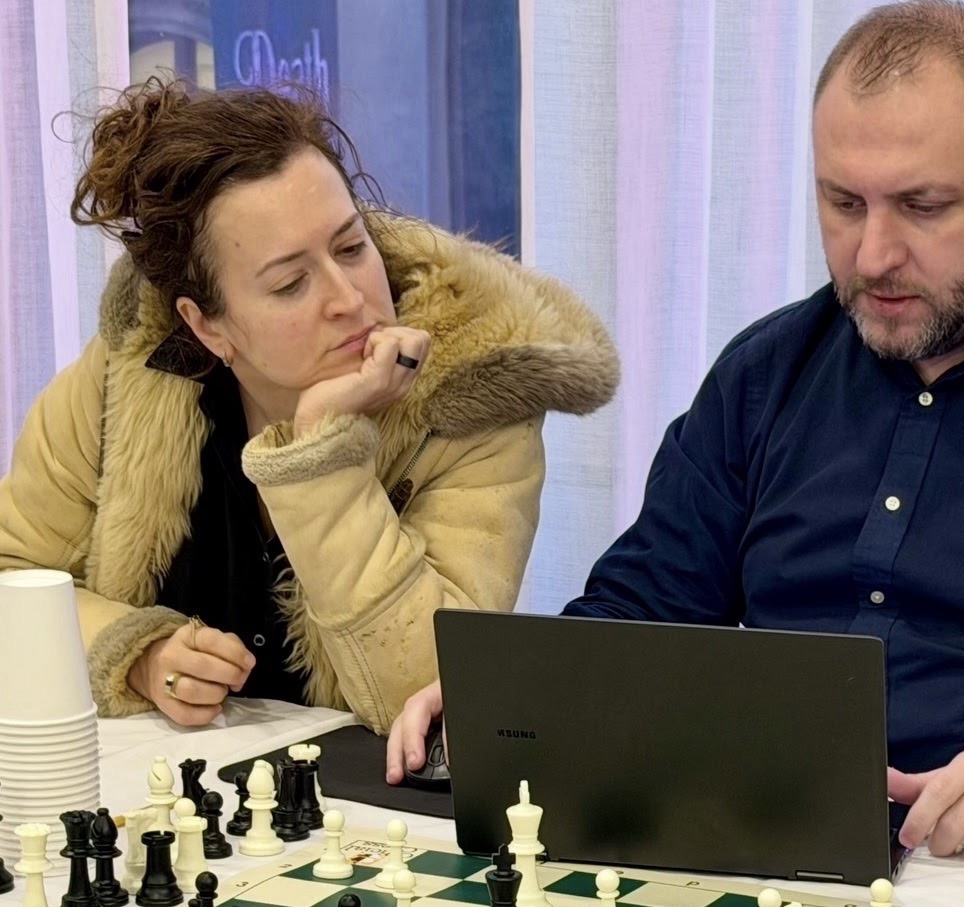
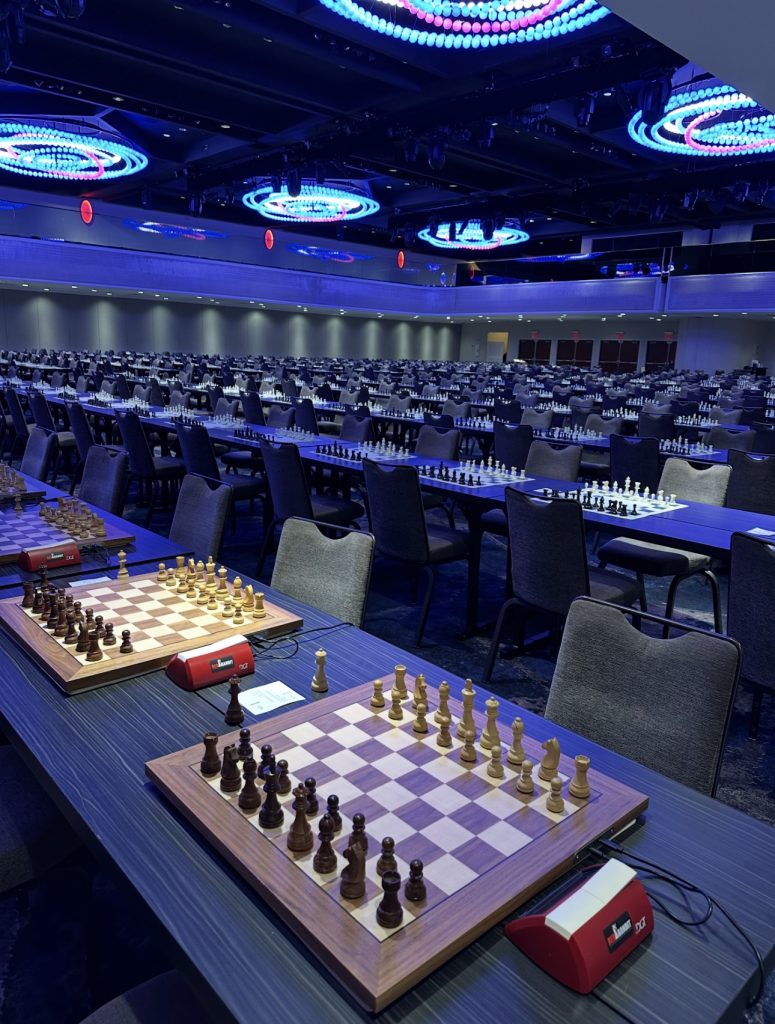
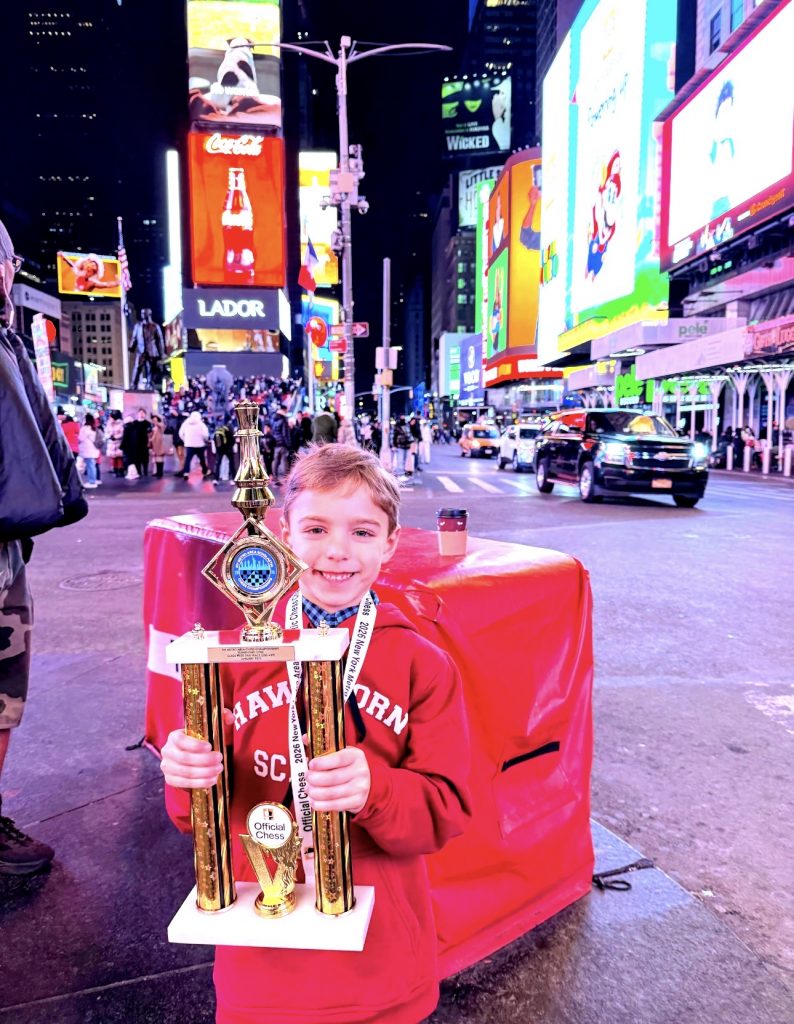
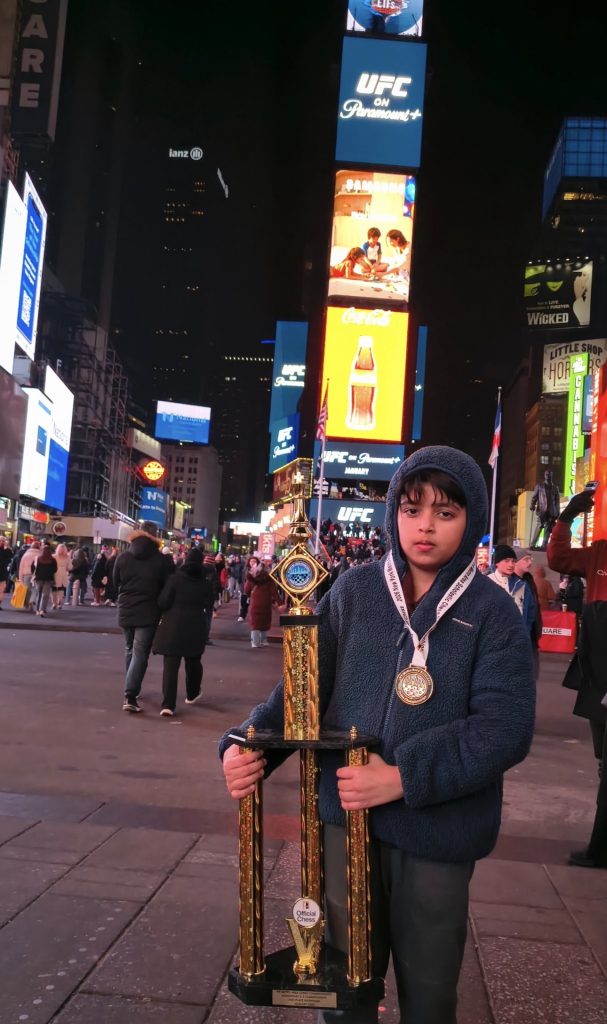
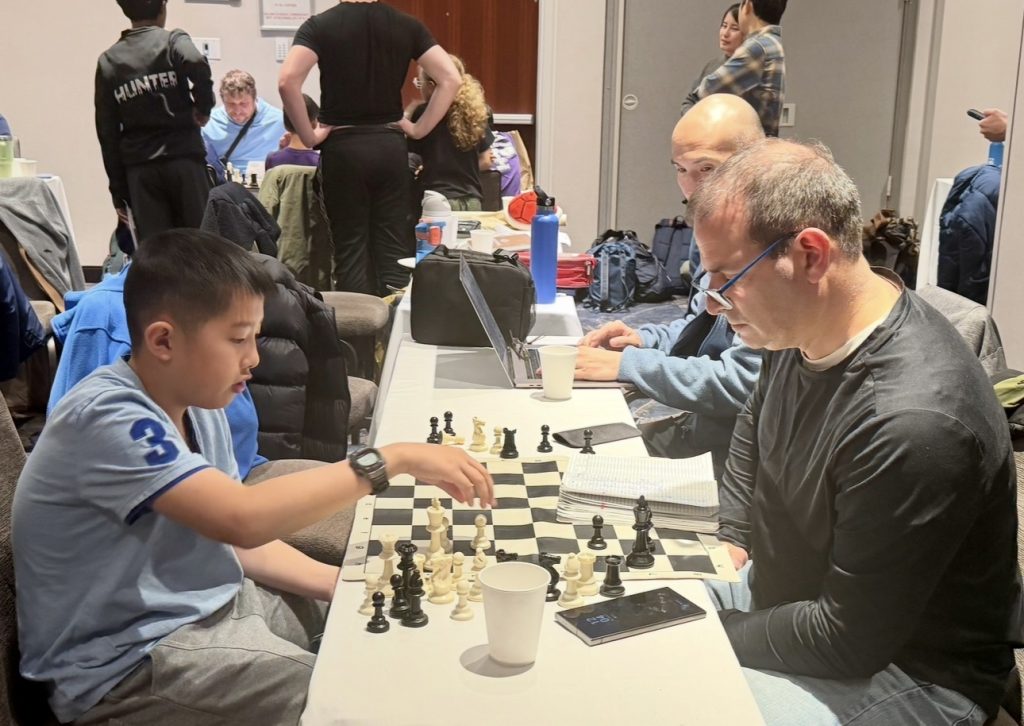
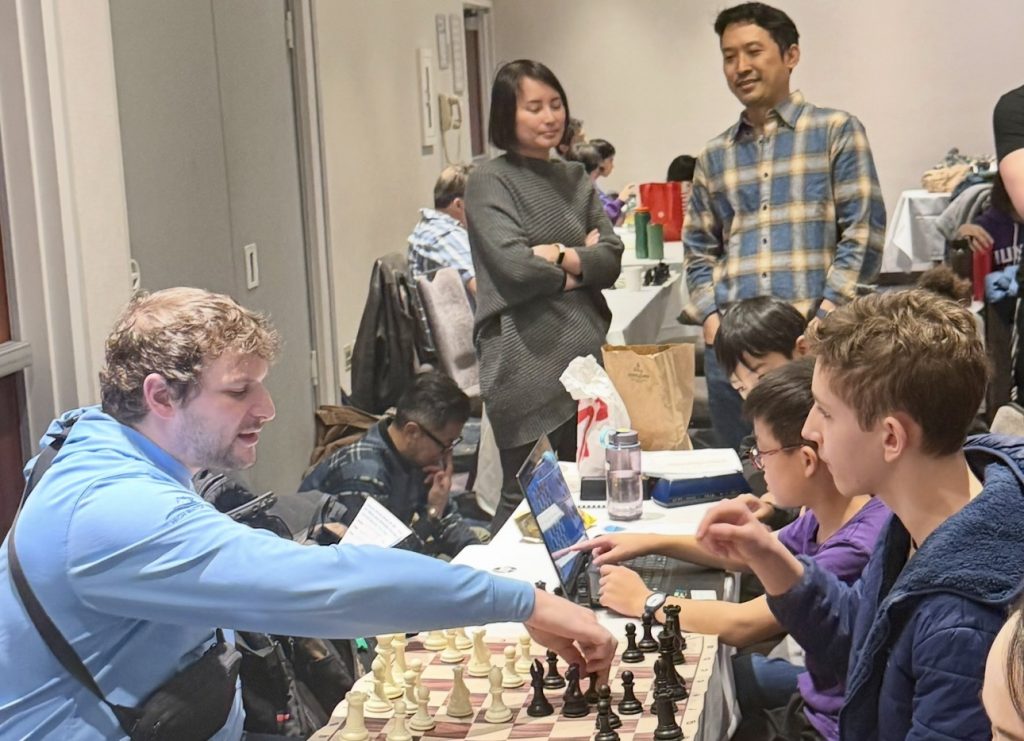
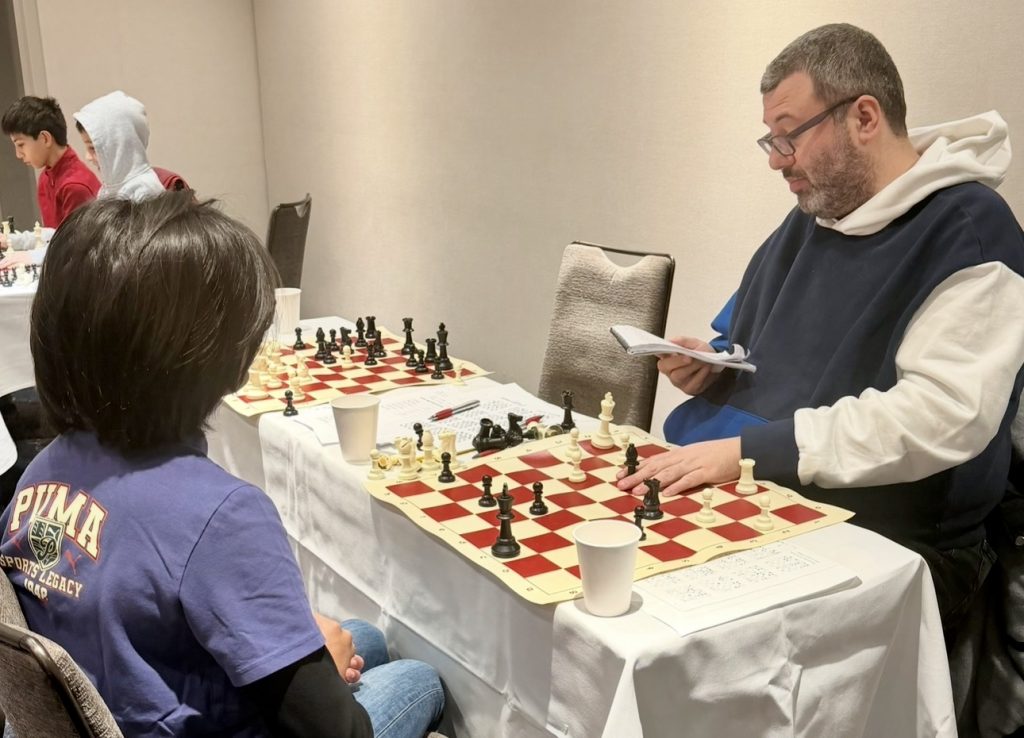
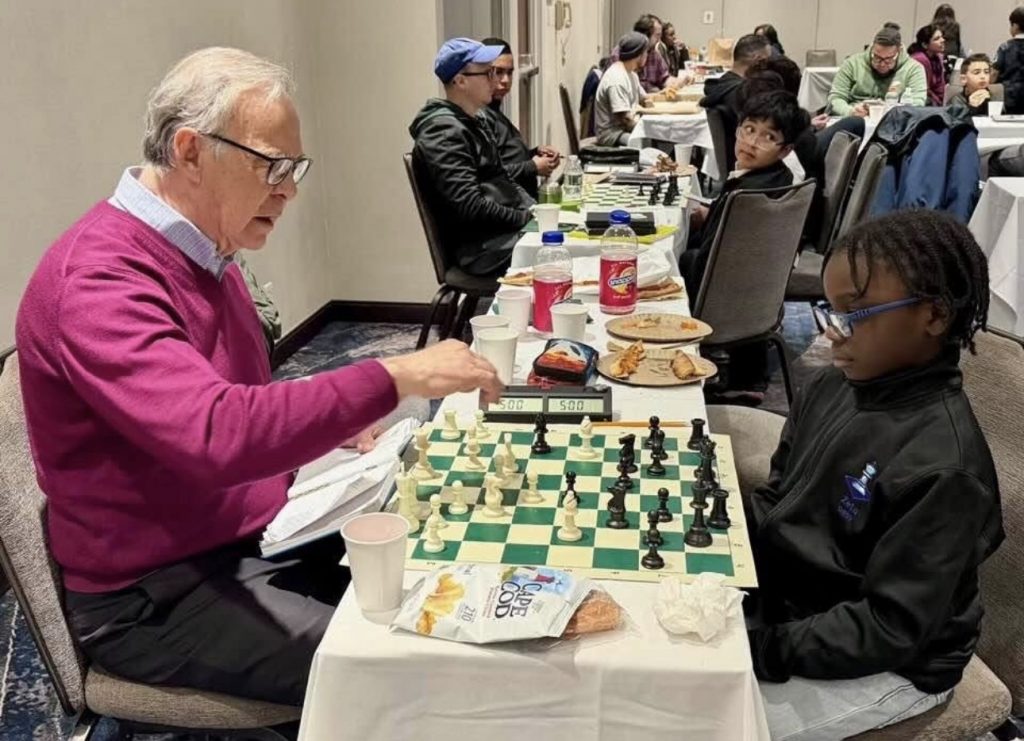
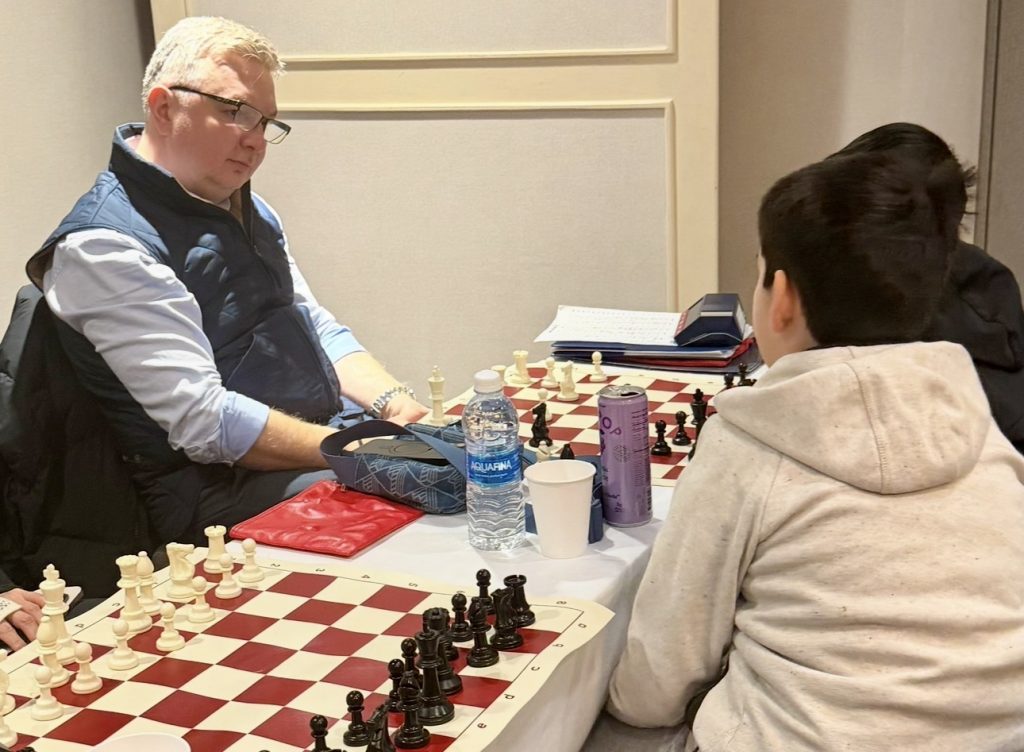
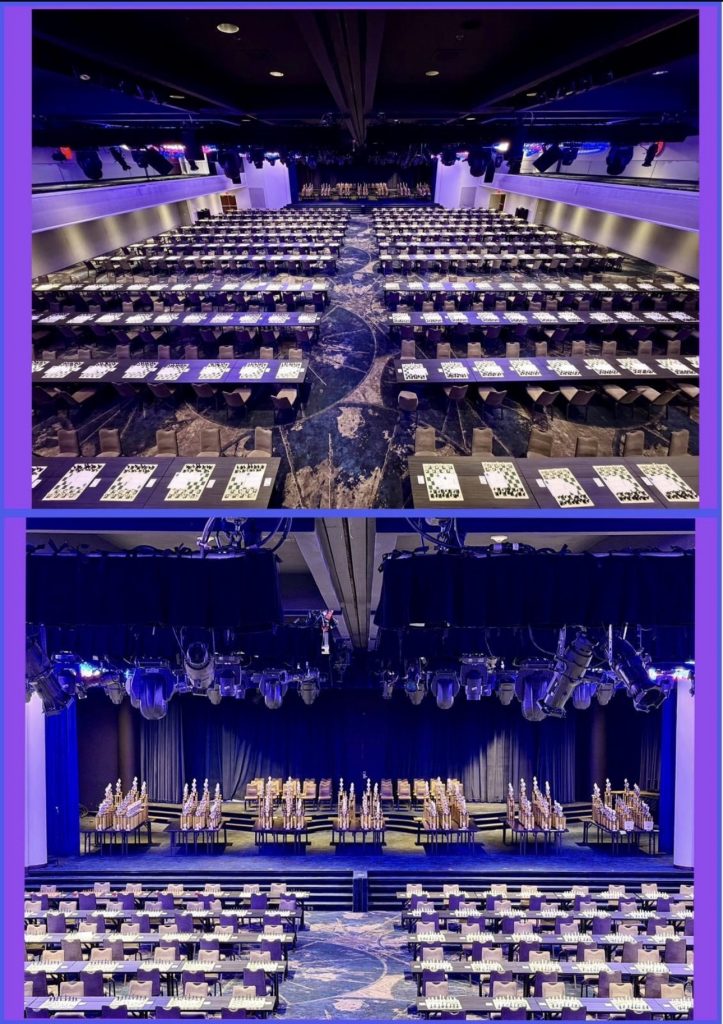
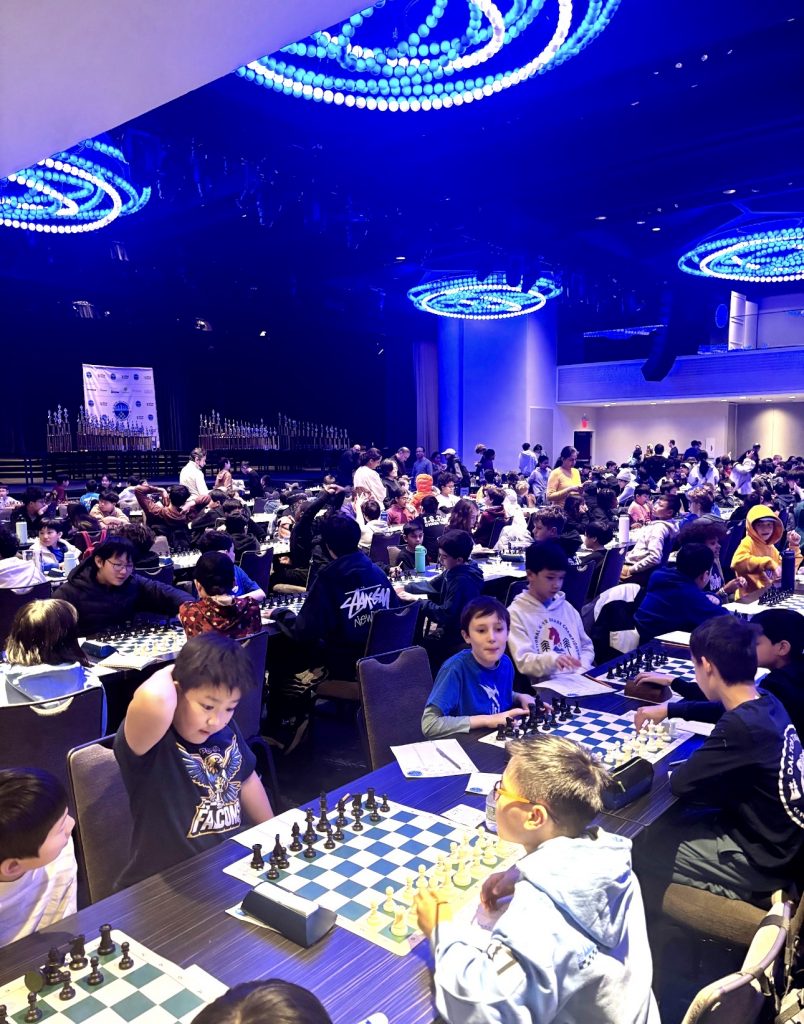
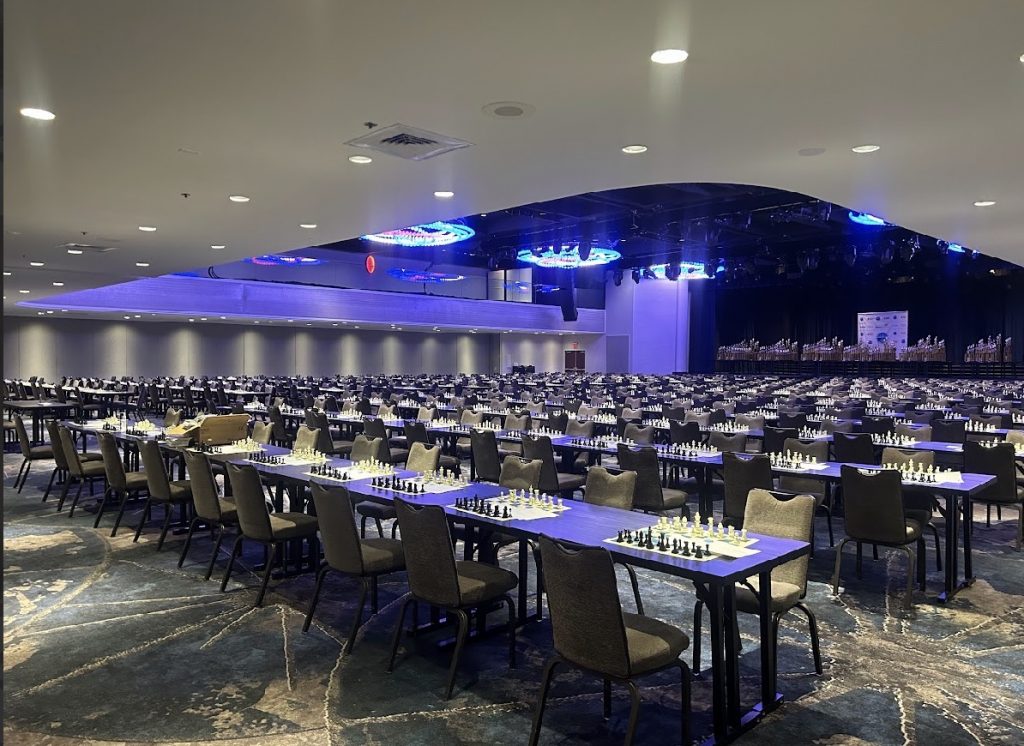
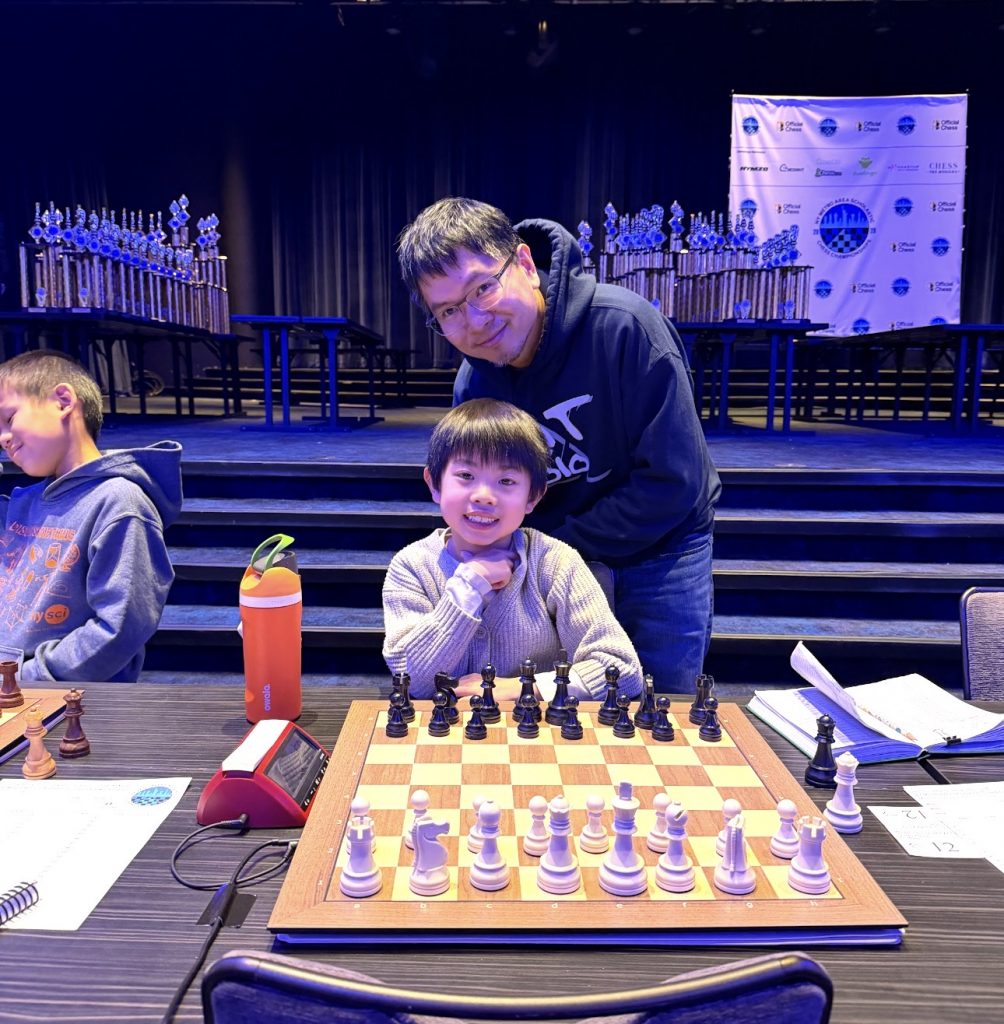
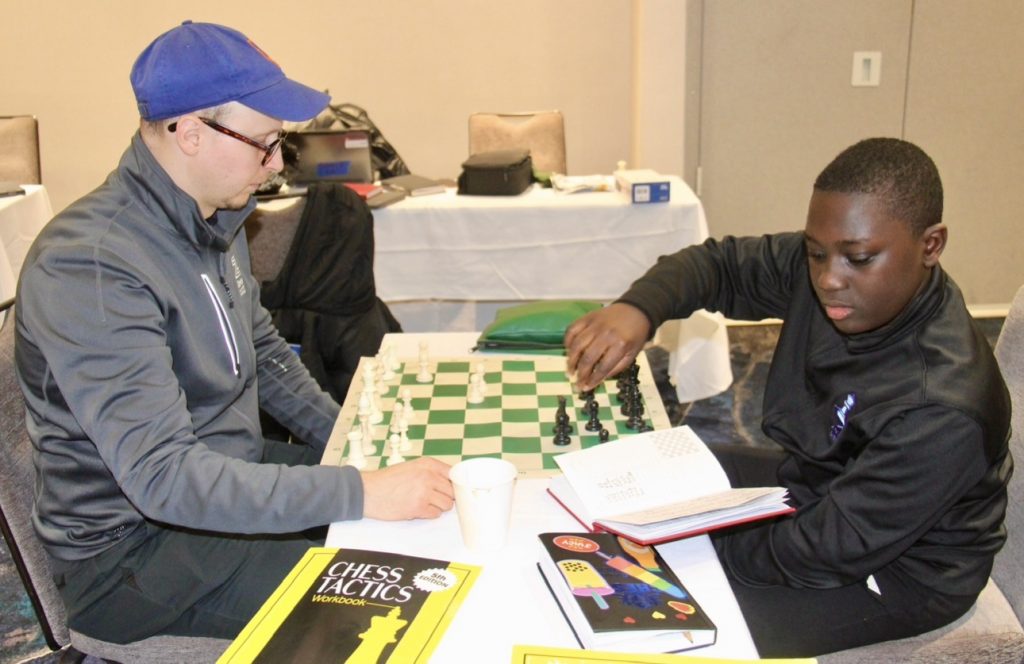
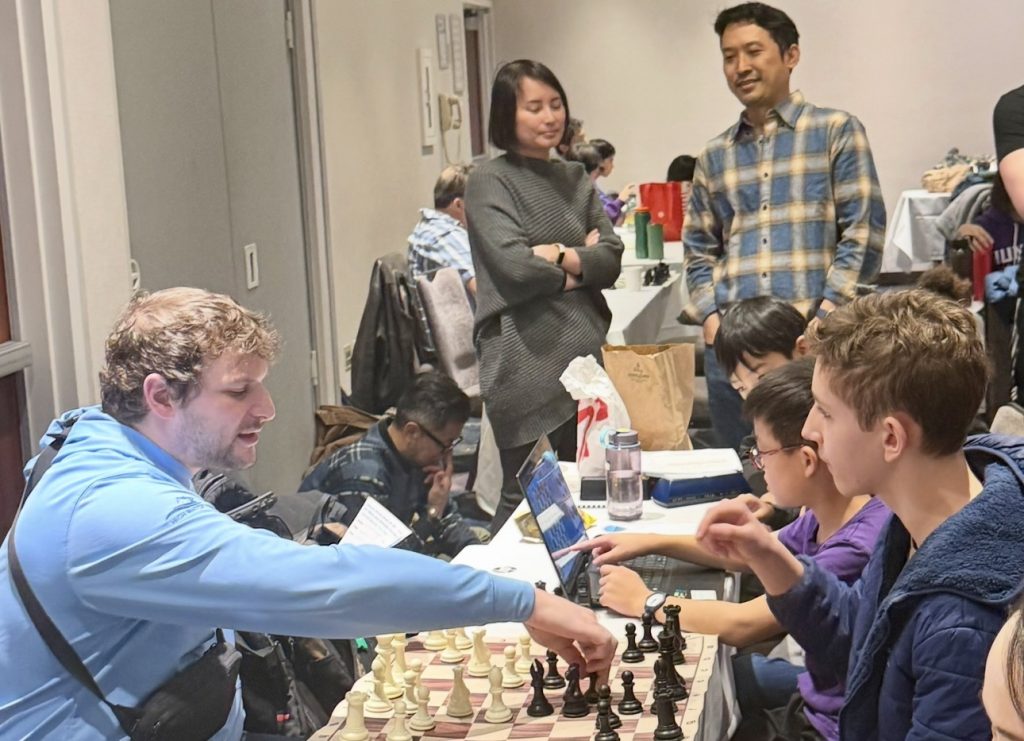
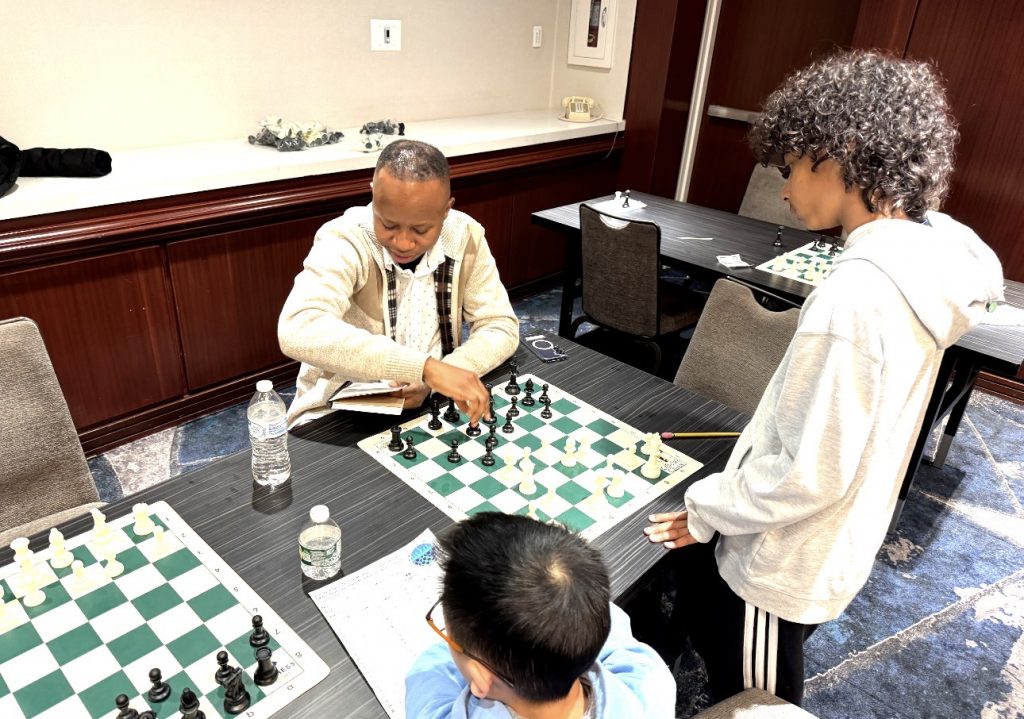
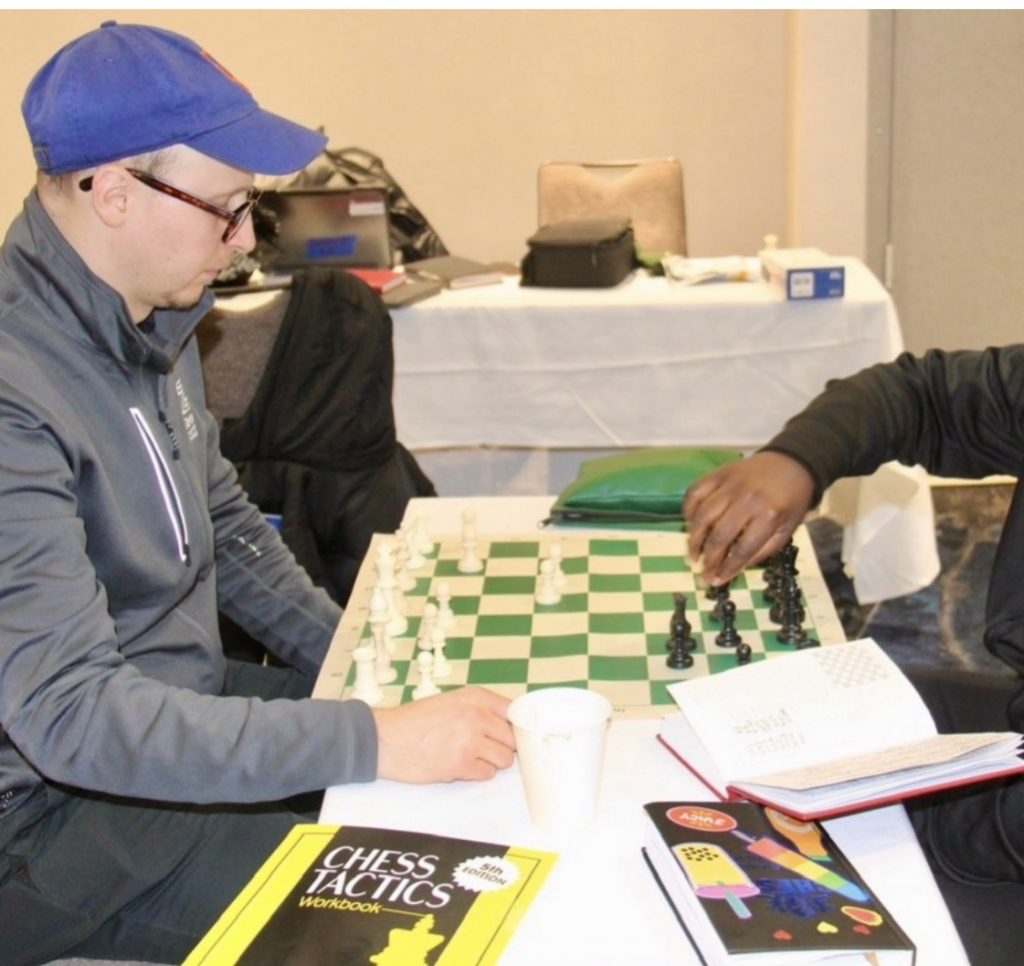
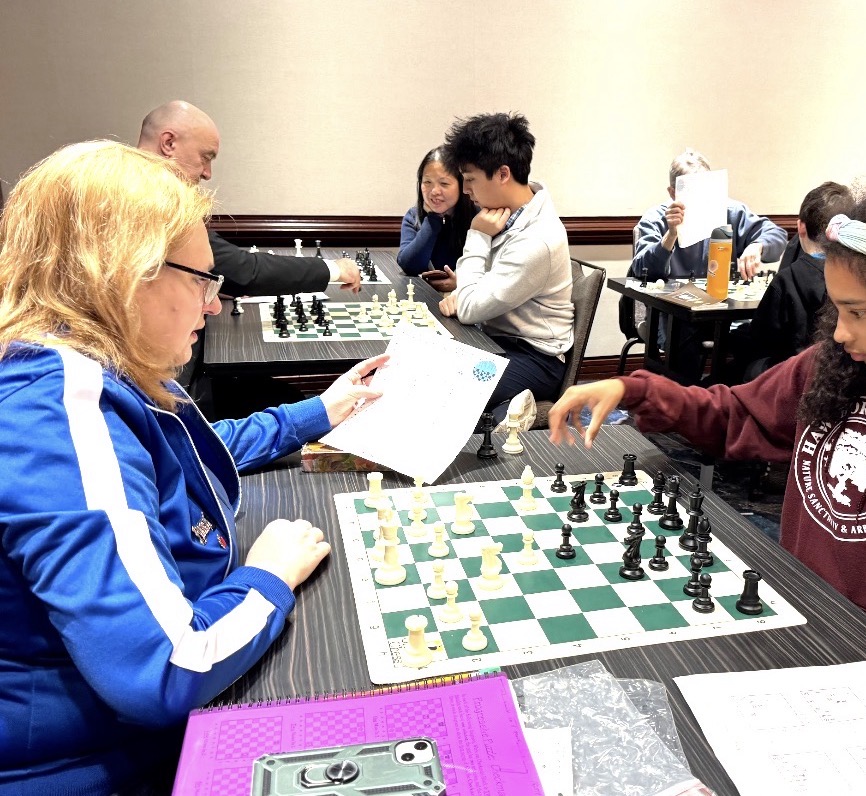
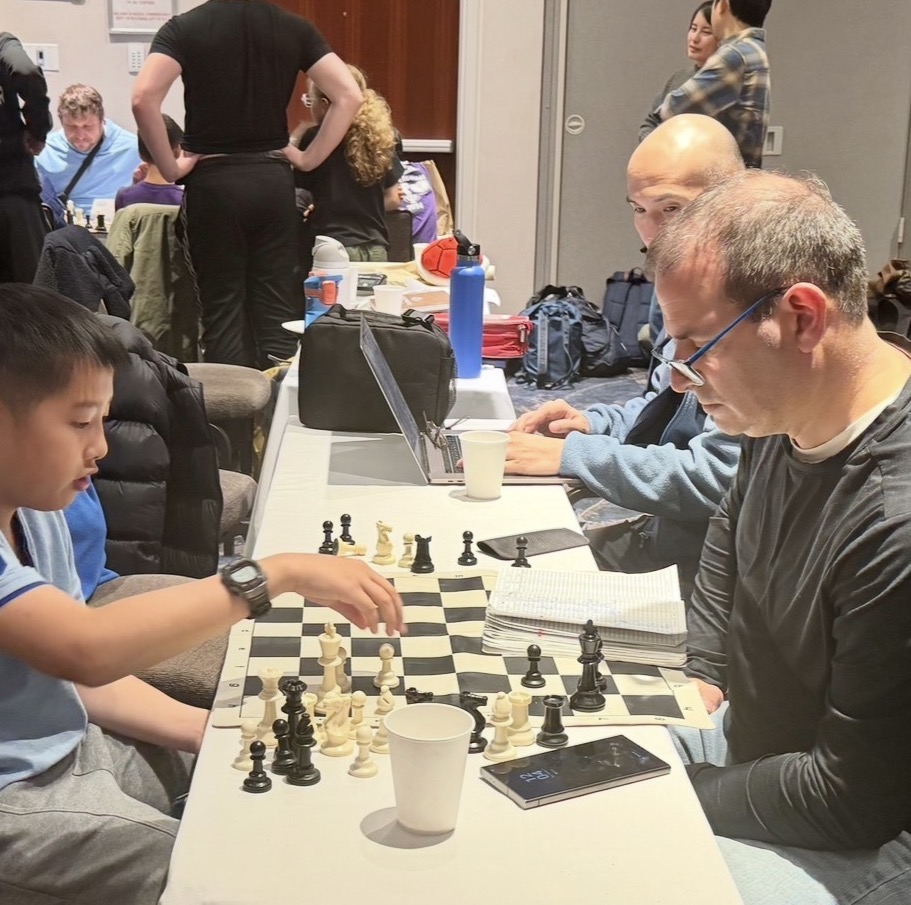
Players of all experience levels gathered in the heart of Times Square at the NYC’s largest hotel, the New York Marriott Marquis, in NYC’s largest ballroom, to compete in an exciting, challenging and rewarding weekend of championship-level chess designed to promote learning, confidence, sportsmanship, and FUN!
Inspiring New Players
A key highlight of the event was its strong support for beginners:
- 177 entries (12.7%) were from Unrated players
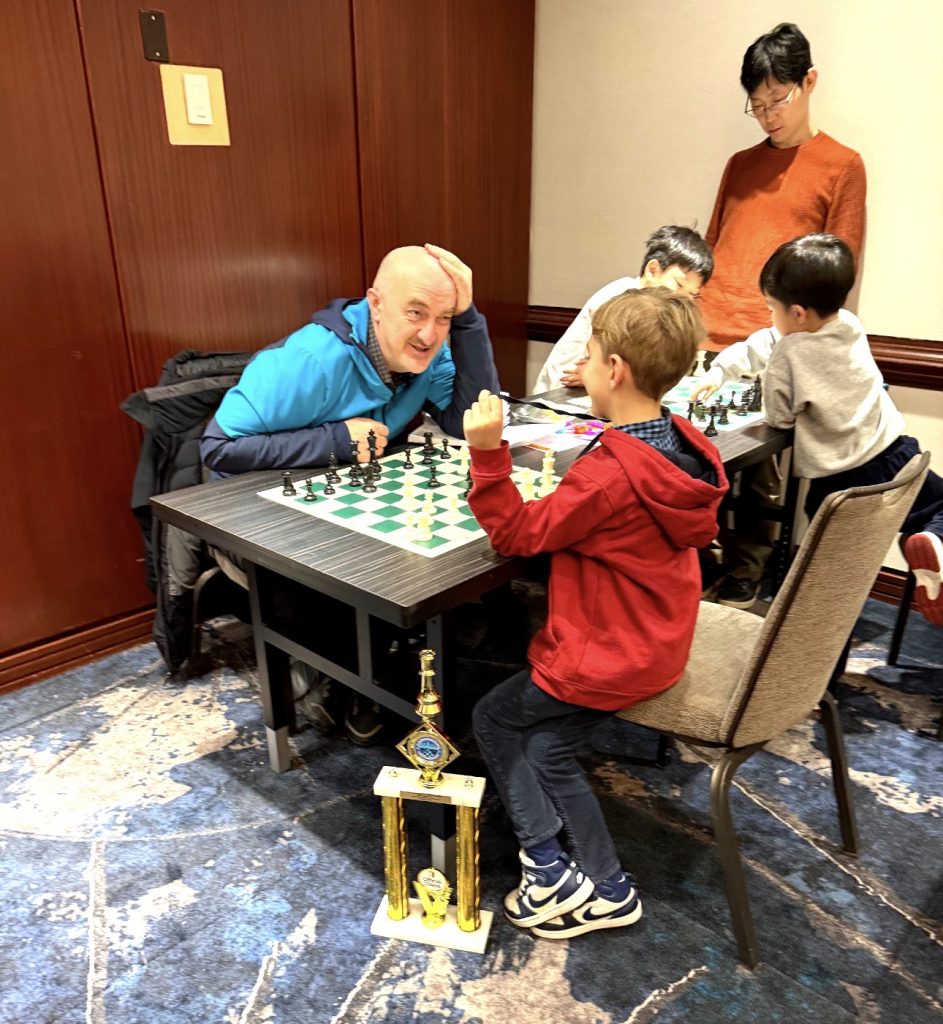
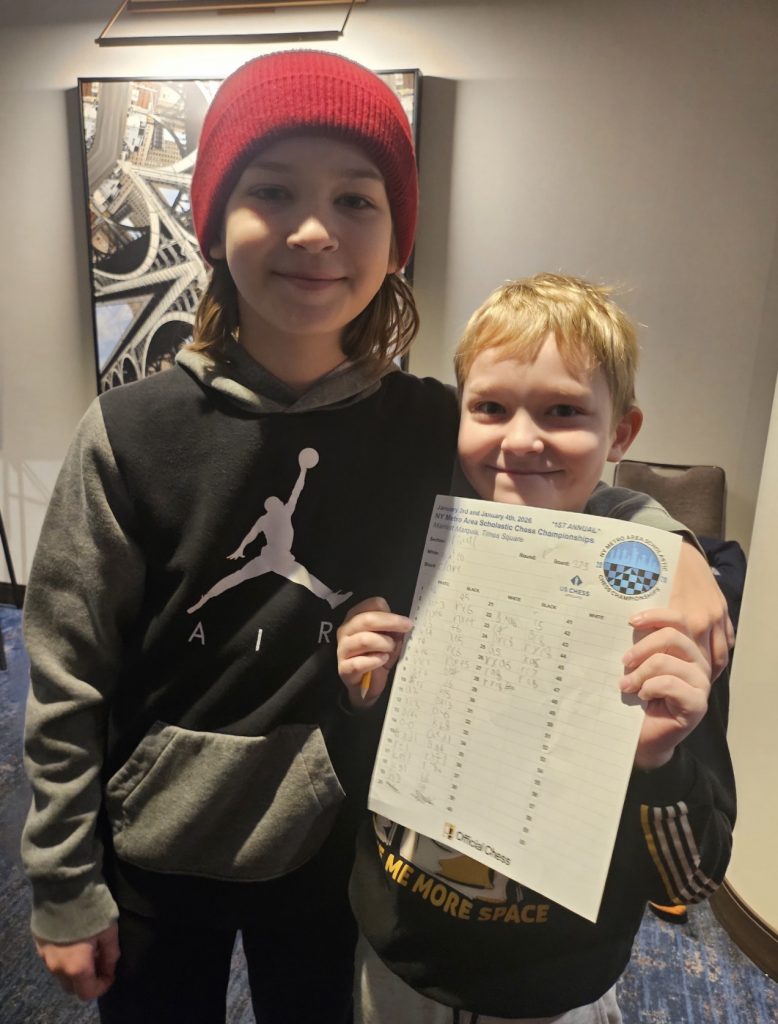
- For many students, this was their very first rated chess tournament
We are thrilled to succeed in our mission of providing new platforms for every chess player to compete. Many local chess players lack the resources required to travel to formal hotel events and the goal of this tournament was to increase access and equity for all.
Sections were carefully designed to ensure fair pairings, helping new players enjoy a positive first experience while learning how tournament chess works.
Where Our Players Came From
While the tournament was proudly rooted in New York, it also welcomed families from beyond the state.
- New York: 94% of entries
- Other locations: 6% of entries
Players traveled from:
New Jersey, Delaware, Connecticut, Pennsylvania, California, Florida, Alaska, Washington, D.C., and Mexico
This wide reach reflects the well-earned reputation of NYC as a premier destination for the best Chess.
Age-Appropriate & Balanced Competition
To ensure every child competed at the right level, the tournament offered both Championship and Under (U) sections at every age group.
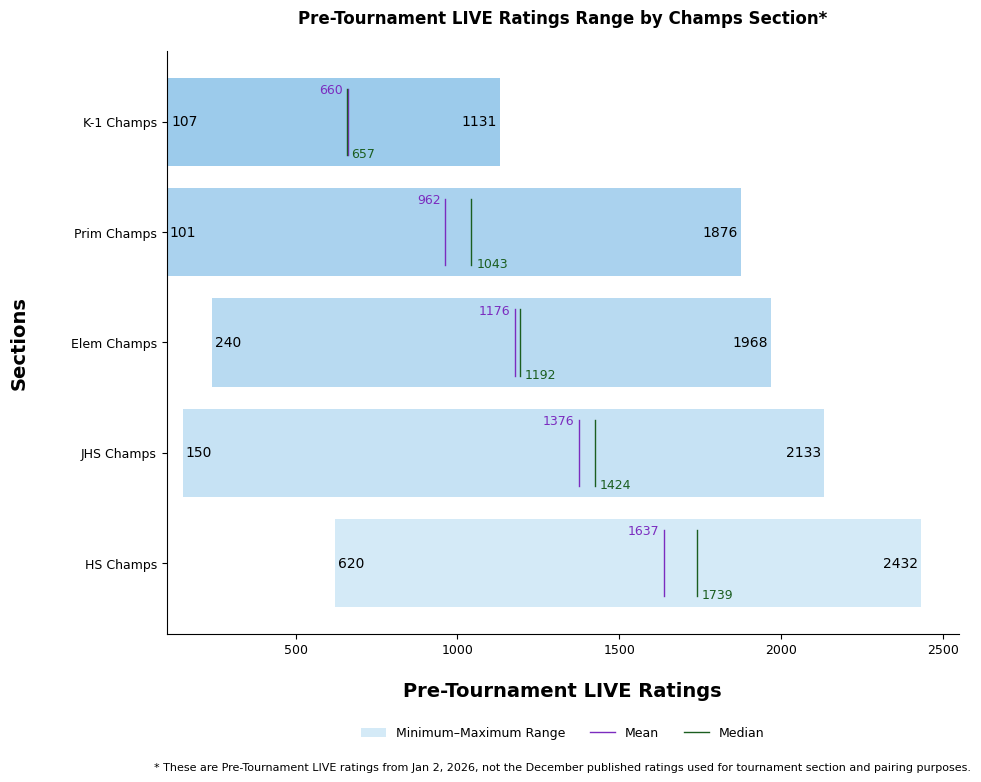
The overall mean rating of the tournament field was 958 (938 median), based on LIVE ratings as of Jan 2, 2026, reflecting a healthy mix of developing and advanced players.
Competitive Strength by Section
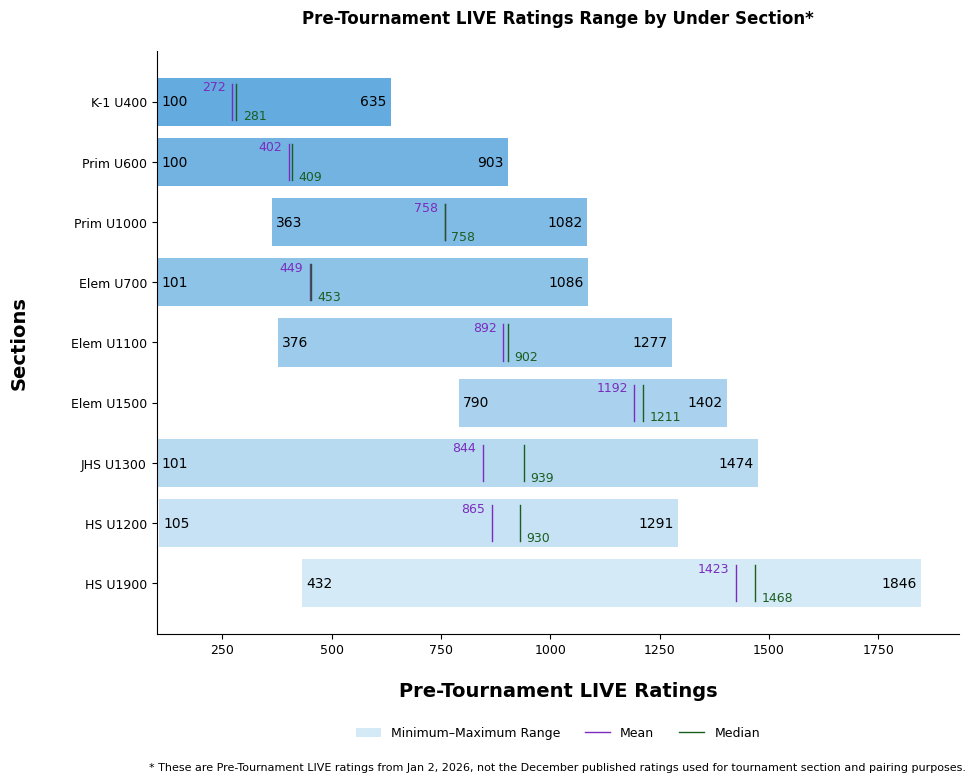
Section Participation
Elementary and middle school sections made up the largest share of entries, while Championship and Under sections remained well balanced. This structure ensured full sections, fair competition, and a smooth tournament experience for all players.
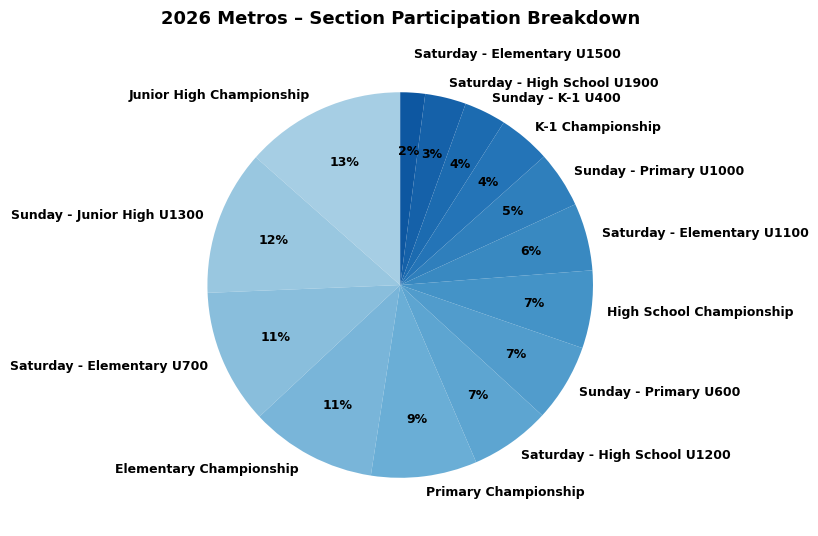
Many students chose to take on an extra challenge — 108 players (8.4%) competed in multiple sections, showing enthusiasm, curiosity, and a growing love for the game.
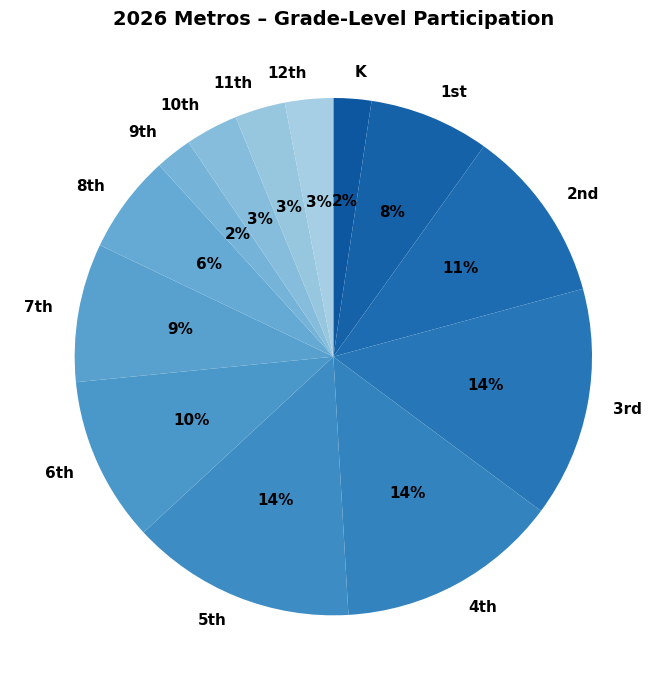
Grades Represented
Students from every grade level participated, with especially strong representation in Grades 3–5. Participation remained steady through middle school and into high school, reflecting strong retention and continued interest as students progress.
Schools & Community
The tournament brought together students from:
- Players representing 368 different schools participated
- Hailing from 107 cities
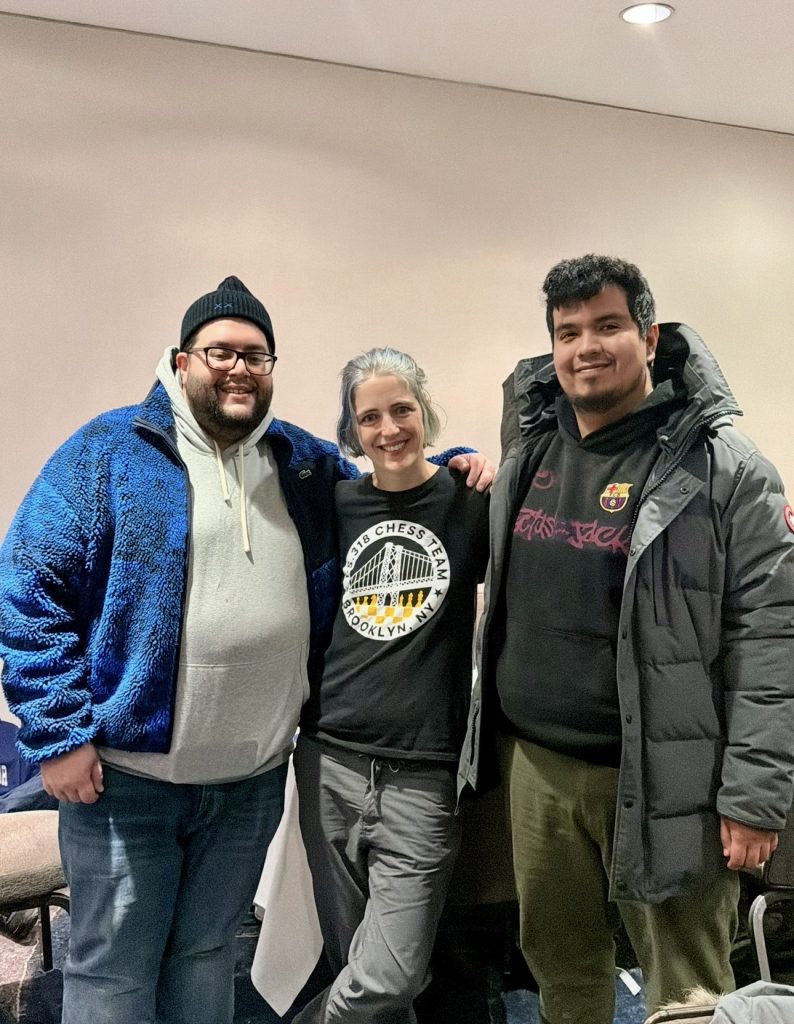
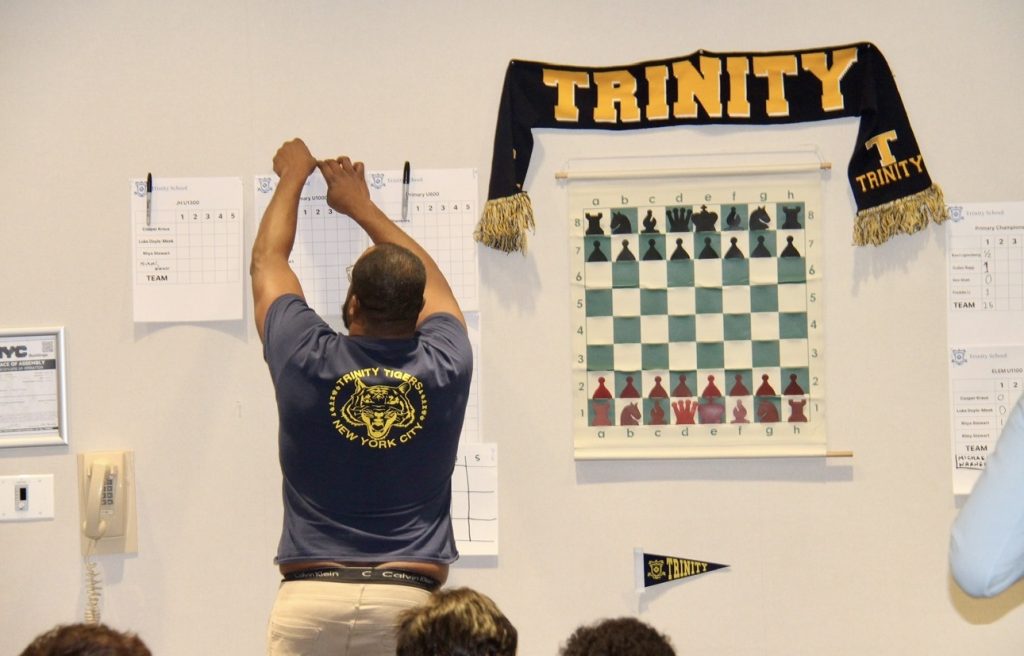
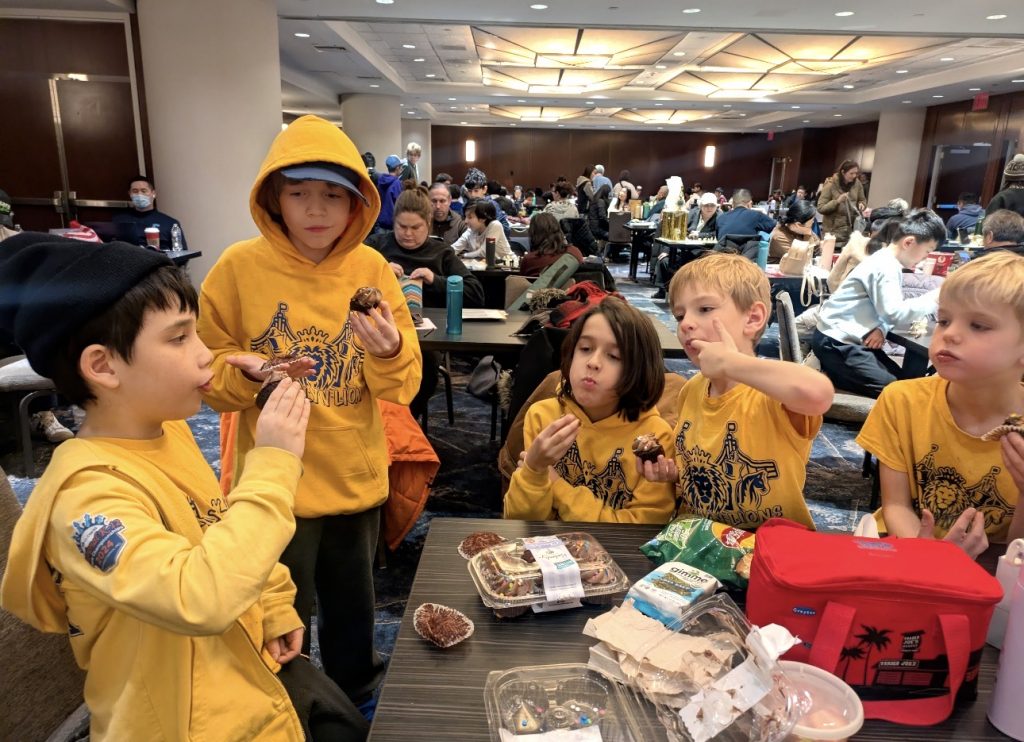
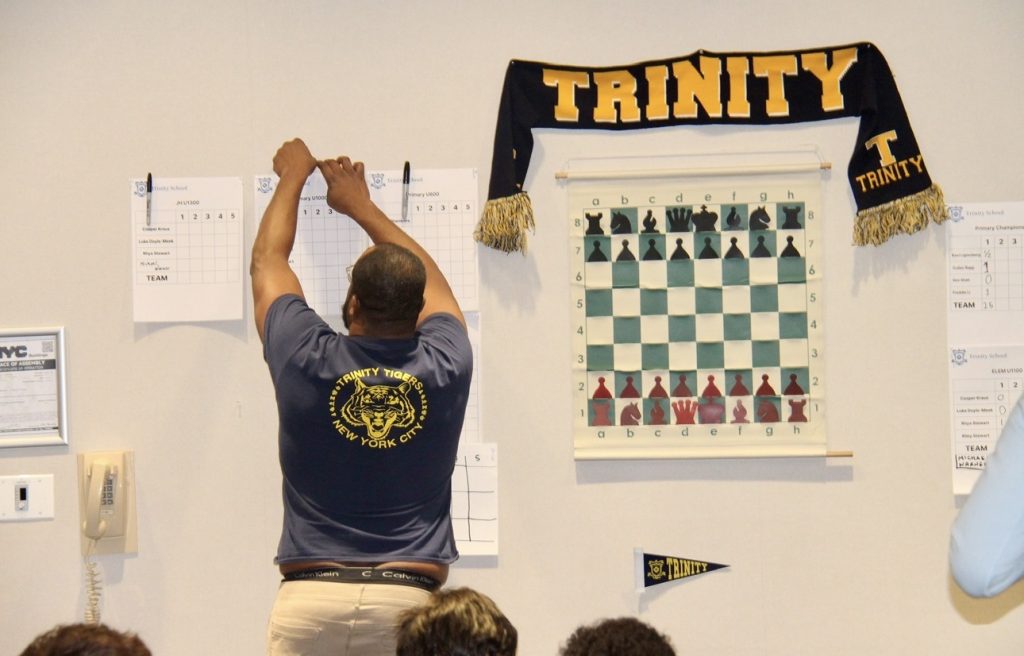
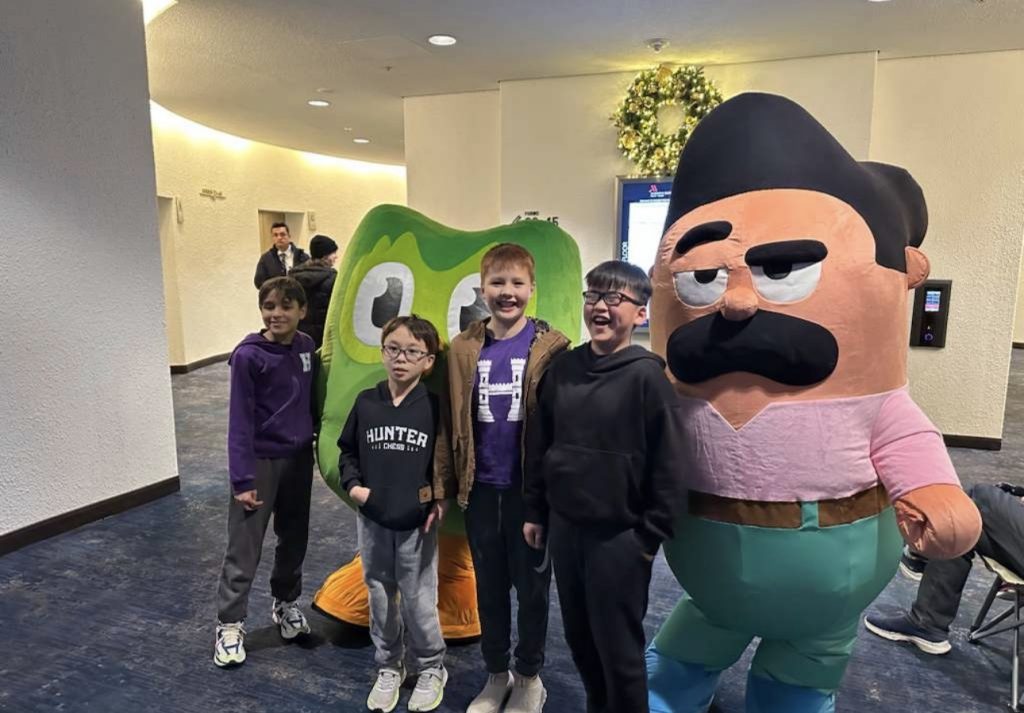
- Many schools attended with teams, creating a supportive and encouraging environment
In fact, over 70% of all entries came from schools with five or more players, highlighting the strength of school-based chess programs.
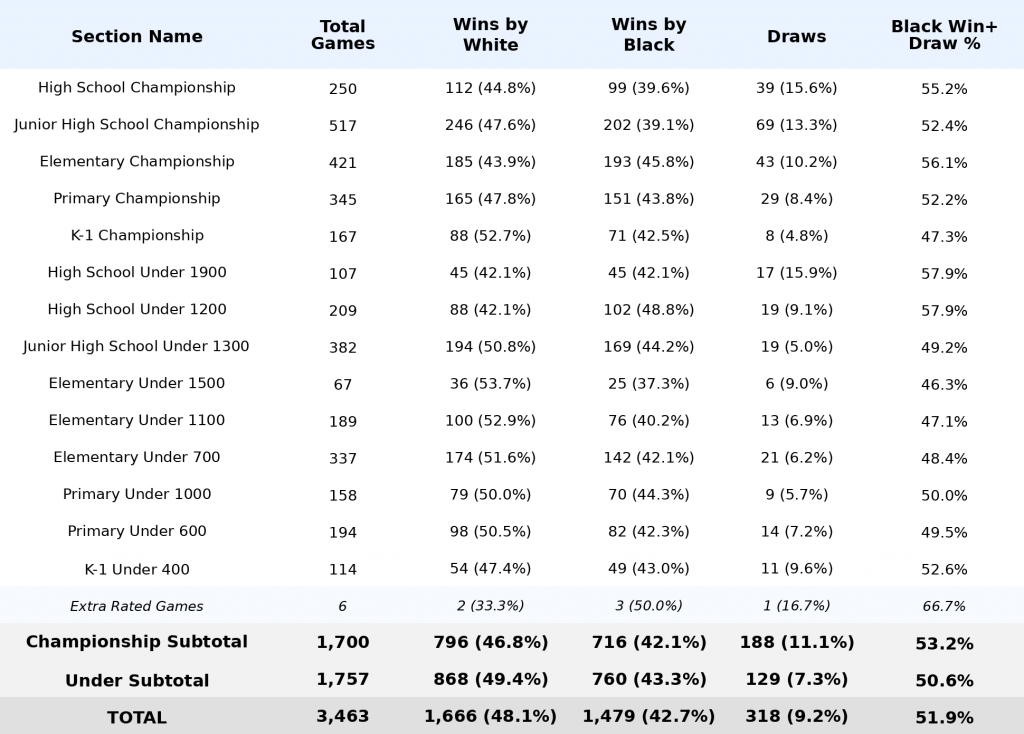
MythBusters: First Move Advantage?
In 11 of the 14 sections (excluding Elementary Championship and both High School Under sections), Black was unable to overcome the first-move disadvantage to secure more wins than White, underscoring how persistent White’s edge is across most brackets.
However, in the older and higher-rated fields (specifically the four highest Championship sections (excluding K-1) and all High School Under sections), Black managed to achieve at least a draw in over half of all games, indicating that stronger defensive technique and preparation materially compress first-move advantage.
By contrast, in all the younger Under sections (except K-1 Under 400), Black was unable to neutralize White’s initiative, losing more than half the games (see far-right column).
The pattern is unambiguous: first-move advantage for White is real, but modest and not statistically significant at the tournament level. As player strength increases, draw rates rise, Black’s defensive resilience improves, and White’s edge diminishes toward parity.
In practical terms, the data shows that with practice, preparation, and experience, Black can, and demonstrably does, overcome first-move disadvantage in a convincing and repeatable way.
To your Chess Kids – Don’t be scared of playing Black, just practice those defensive openings!

Favorites vs. Underdogs: What’s in a Number?
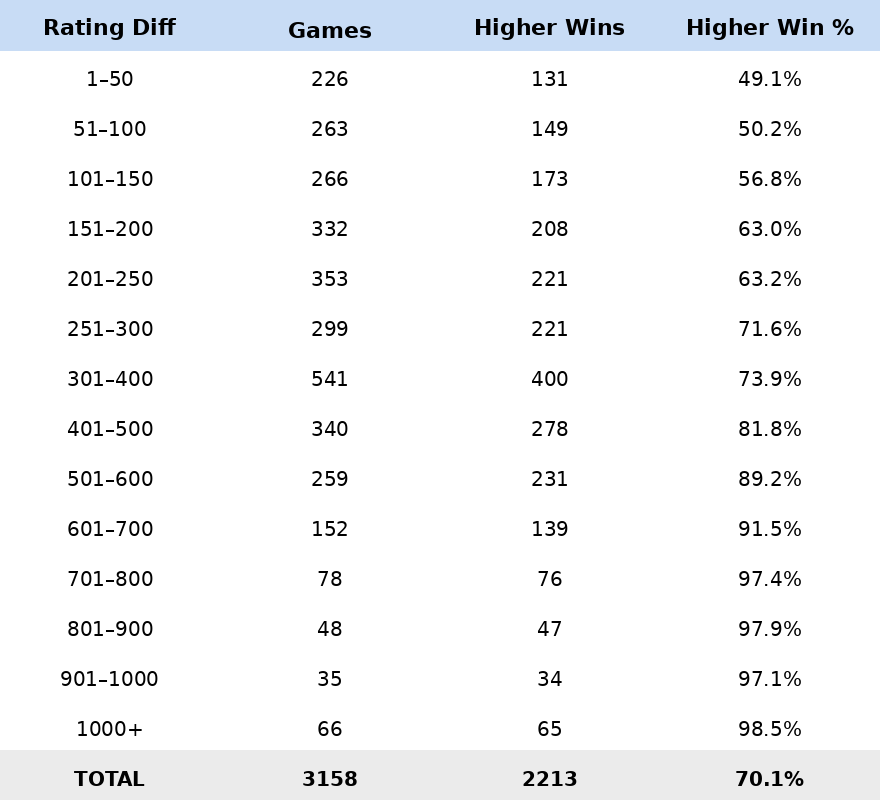
Depends on the number: As you’d expect, the larger the rating difference, the more likely the higher-rated player is to win. But even within a 150-point gap, the higher-rated player’s chances are only slightly better than a coin flip. And when the difference balloons to 301–400 points, the lower-rated player still won more than 25% of the time at the Metros – a striking reminder of how unpredictable scholastic chess can be.
Not counting unrated players, 945 games, nearly 30% of all Metros games, ended in an upset, where the lower-rated player defeated a higher-rated opponent.
Another note to your Chess Kid: if you’re the underdog, don’t worry about the rating difference. Focus on playing your best game, because surprises happen all the time. And if you’re the higher-rated player, the advice is the same: stay locked in and take nothing for granted. We know you don’t want to be on the wrong end of an upset!
Most Important Statistic
With 6,926 games played by black and white over the weekend, over 6,926 hugs were given to our amazing Chess Warriors (we counted).
Looking Ahead
Whether your child was playing in their very first tournament or competing at an advanced level, this event was designed to build confidence, resilience, and a love for chess.
We look forward to welcoming families back at future events and continuing to support students as they grow — both as chess players and as learners.
Make sure to sign up as soon as tickets go on sale for next year as we will track even more stats like wins and losses based on which hand the player uses to move their pieces, what they ate for breakfast and how long they brushed their teeth for in the morning 😁
Thanks.
OC